 –Andy Gustafson
Helping the poor to establish a baseline of human dignity for themselves through work is something that is essential. I just returned from a great conference in the Philippines put on by the Ryan Institute at St. Thomas University, De Lasalle University of the Philippines, and Ateneo University, a Jesuit University in the Philippines. There were so many great takeaways from the conference having to do with Catholic Social Teaching, but a few were:
1. Philanthropy needs to be directed towards creating possibilities for the poor to have sustainable means of taking care of themselves. Handouts to the poor are not a long term strategy.
2. In the Philippines, as in many countries, those who gain education are educated to go ‘work for other people’– nursing, maids, laborers, etc. Usually they are not encouraged to think entrepreneurially– the truly sustainable means by which they might support themselves.
3. One very important insight from Catholic Social Thought– which any Christian can accept I believe– is that of subsidiarity– that grassroots localized projects are better than centralized ones at empowering individuals. Church, labor unions, and other localized organizations should be used to help people have the means to support themselves.
4. Solidarity: While it is important to help each person to be able to break the cycle of poverty, it is also important to recognize that we are all in this together– and that my actions affect others, and visa-versa. To act as though we are isolated atomistic beings separate and independent from all others is not only not in line with Christian thought, it is simply false.

Subsidiarity and Solidarity are two of the basic “Catholic Social Teachings” which are, in my mind, acceptable to any Christian. The fact that they arose from Catholic thinkers is ultimately irrelevant to their truth.
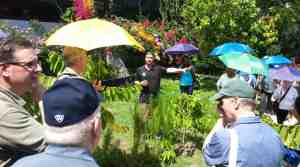
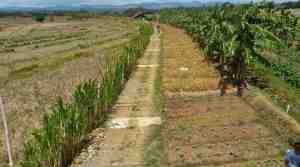
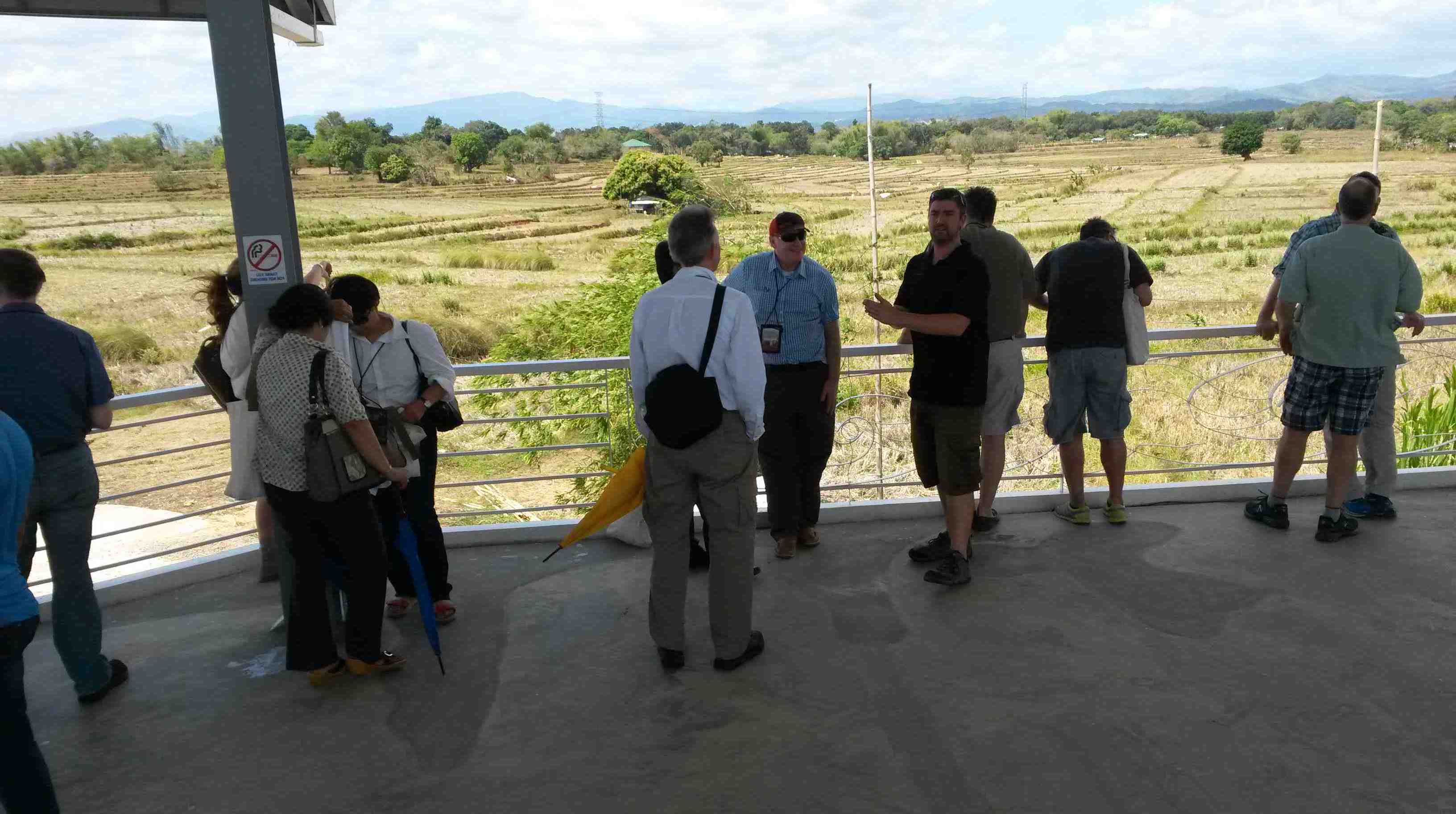
So the Enchanted Farm, which we visited on Saturday, is a project of Gawad Kalinga, which is a national movement in the Philippines to empower the poor and help them out of poverty. In the remainder of this post, I will simply post what their website says– it is a powerful understanding of poverty, the causes of poverty, and their attempt to overcome it:
From their website:
The problem of poverty is not about a lack of money as much as it is a loss of human dignity.
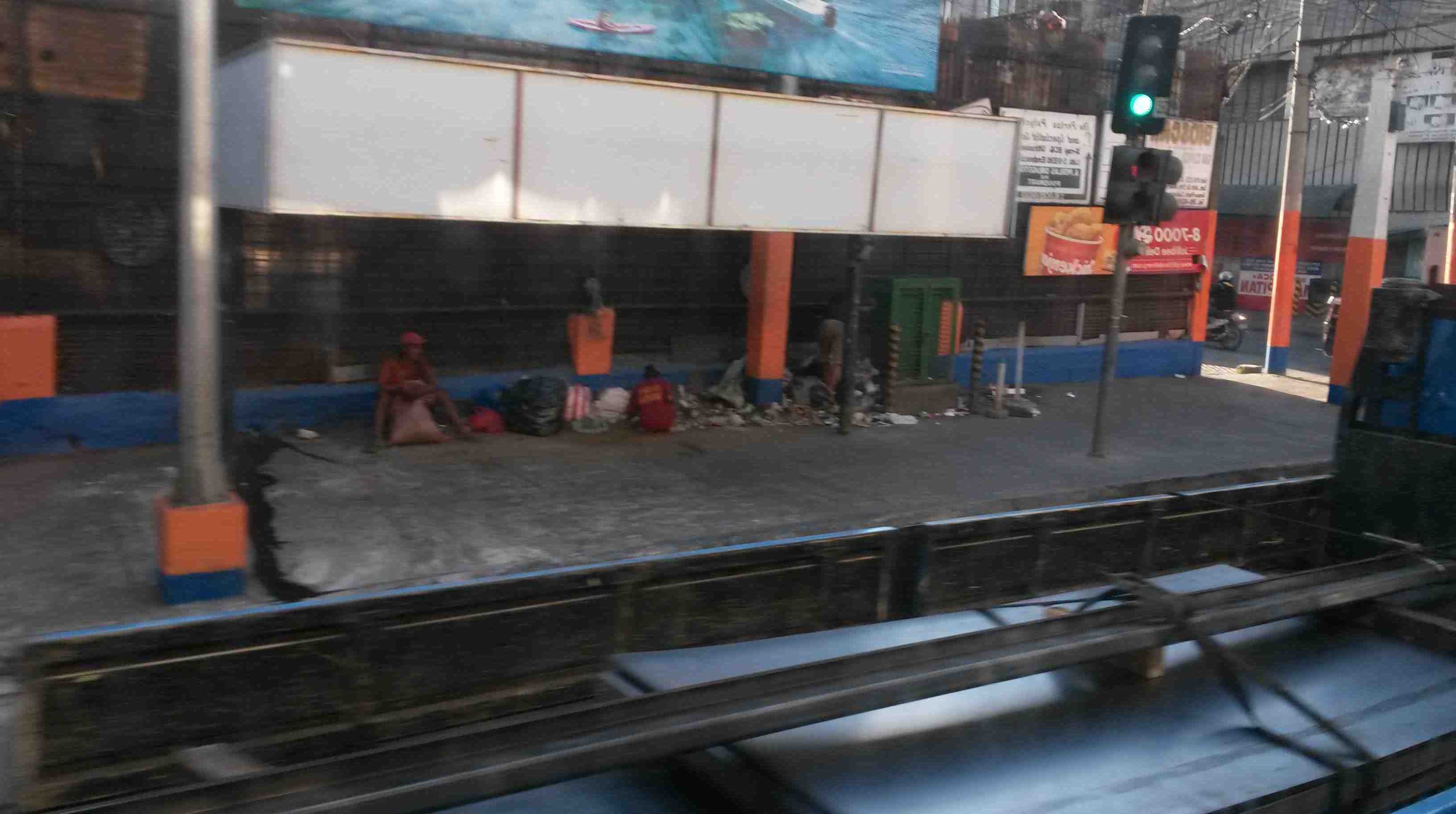
The poor may not have steady financial resources to support their basic needs but what permanently cripples them the most, disabling them from rising from poverty, is the loss of human dignity. Once stripped of their dignity — forced to live in conditions quite close to that of a pig pen, people start to live like pigs. It is then that standards of living decline, value systems crumble and chaos rules. Moreover, they lose their capacity to dream and work towards achieving their dreams.
Poverty is most debilitating to the men who are reduced to living like animals (becoming predators) when they are de-humanized and stripped of their natural male nobility.
Men, by their very nature, are meant to be hunters and protectors of their families and, most especially in the Philippines, men are expected by society to be the providers. Caught in the cycle of poverty and being unable to deliver as he is expected to, Filipino men lose motivation to be productive members of society and instead turn towards vices of drinking, gambling, mendicancy and some, even turn to a life of violence to regain their primacy over society.
The cycle of poverty is rooted in the divisiveness of our nation.
The Filipinos are an intelligent and talented people but most have been pursuing the path of individual gain and achievement without a conscious effort to work for the common good. For decades now politics, religion, socio-economic class and ideology have divided the country. Further, driven by ambition, self-interest, pride and the need to provide for their children and their family beyond their need, those who have material wealth have turned a blind eye to a great many others who are in need. The Filipino has lost his inherent culture of bayanihan, its culture of working together as a community for the greater good.
That is why GK’s attack to poverty is quite revolutionary. It does not address poverty through a purely financial solution. It addresses poverty through environmental and social engineering. And more than being a non-profit or charity organization,
Gawad Kalinga is a movement of nation-building.
GK focuses on the restoration of the dignity of the poor by building colorful GK homes in beautiful communities.
From flimsy shanties of bleak grey rusted iron sheets, motley brown used plyboards and tattered tarpaulins and plastic, GK builds for the poor sturdy structures painted in bright colors of hope. From unsanitary surroundings, GK brings them to clean, beautifully landscaped communities. From bare survival in structures akin to pig pens and chicken coops the poor now turn to a quality of life equal to upscale subdivisions. By providing them with a middle-class environment the poor start to have middle-class dreams and aspirations to work for.
Where most interventions target women and children, for GK the initial intervention is through the men.
GK raises the men to their inherent nobility and productivity by getting them to build homes for their family and for their community. GK puts man’s natural brawn to good use – turning him away from destructive activities in society and instead leading him towards building for his neighbor.
The success of a GK community is hinged on the improved quality of life of the entire community rather than the economic or material standards of living of an individual.
Through its various programs, GK aims to renew the culture of bayanihan in its communities. GK breaks the current culture of individual gain and instead envisions a strong united community that builds together, plants together, harvests together and rises together – believing that no one will be left behind.
Through GK, Filipinos and people of all faiths and races are transcending differences to come together for nation-building. GK unites by not discriminating in terms of politics, religion or ideology. In Mindanao, GK has forged friendships and partnerships in various communities where Christians, Muslims and lumads build together, live together and rise together.
Breaking out of the usual fund-raising mentality, GK focuses on building strong partnerships. In GK, everyone is welcomed not as a donor but as a key stakeholder… a committed and passionate partner in re-building the nation. Through a creative formula of counterparting, GK has been able to forge strong multi-sectoral partnerships that bring together individual resources (financial, human and extraordinary) to effectively fill in gaps. In the model of Kalinga Luzon, the national government through National Disaster Coordinating Council and the Department of Social Welfare and Development provided a 50/50 share of the funds with GK for the construction of homes. The local government secured the land, provided site development and the use of heavy equipment. Other groups come in to drive the programs on-ground.
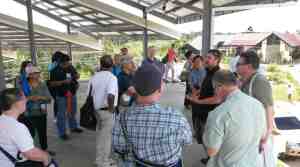
I was so grateful for the opportunity to learn about the work of Gawad Kalinga and the Enchanted Farm.

 Business, Faith, and the Common Good Institute