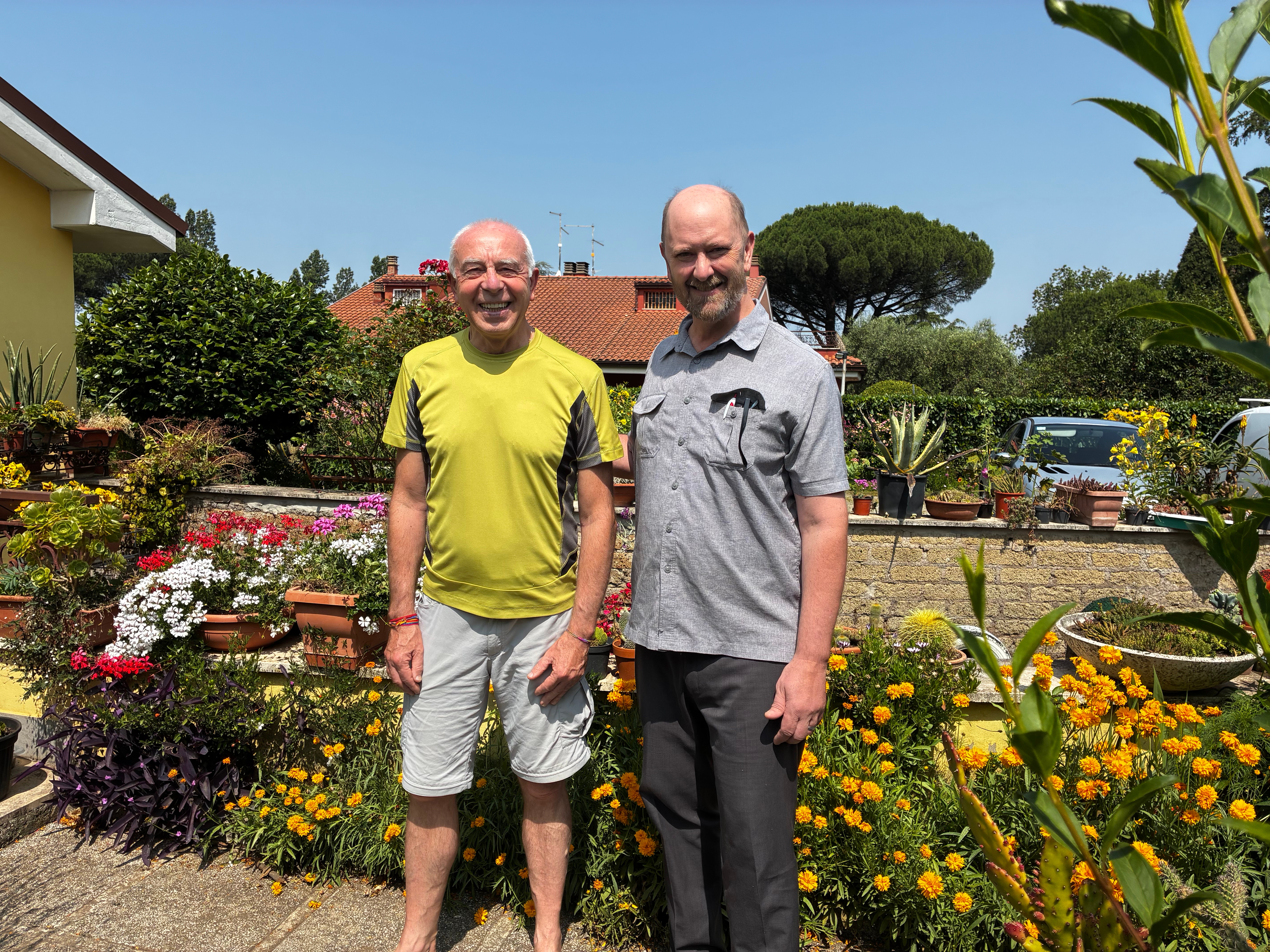
I had the fantastic opportunity to travel to Rome last week. While there, I was able to attend the East Asian Economy of Communion annual meeting, and also to attend the Shape the World Summit 2025, put on by Consulus (Singapore) which brought together leaders from around the world.
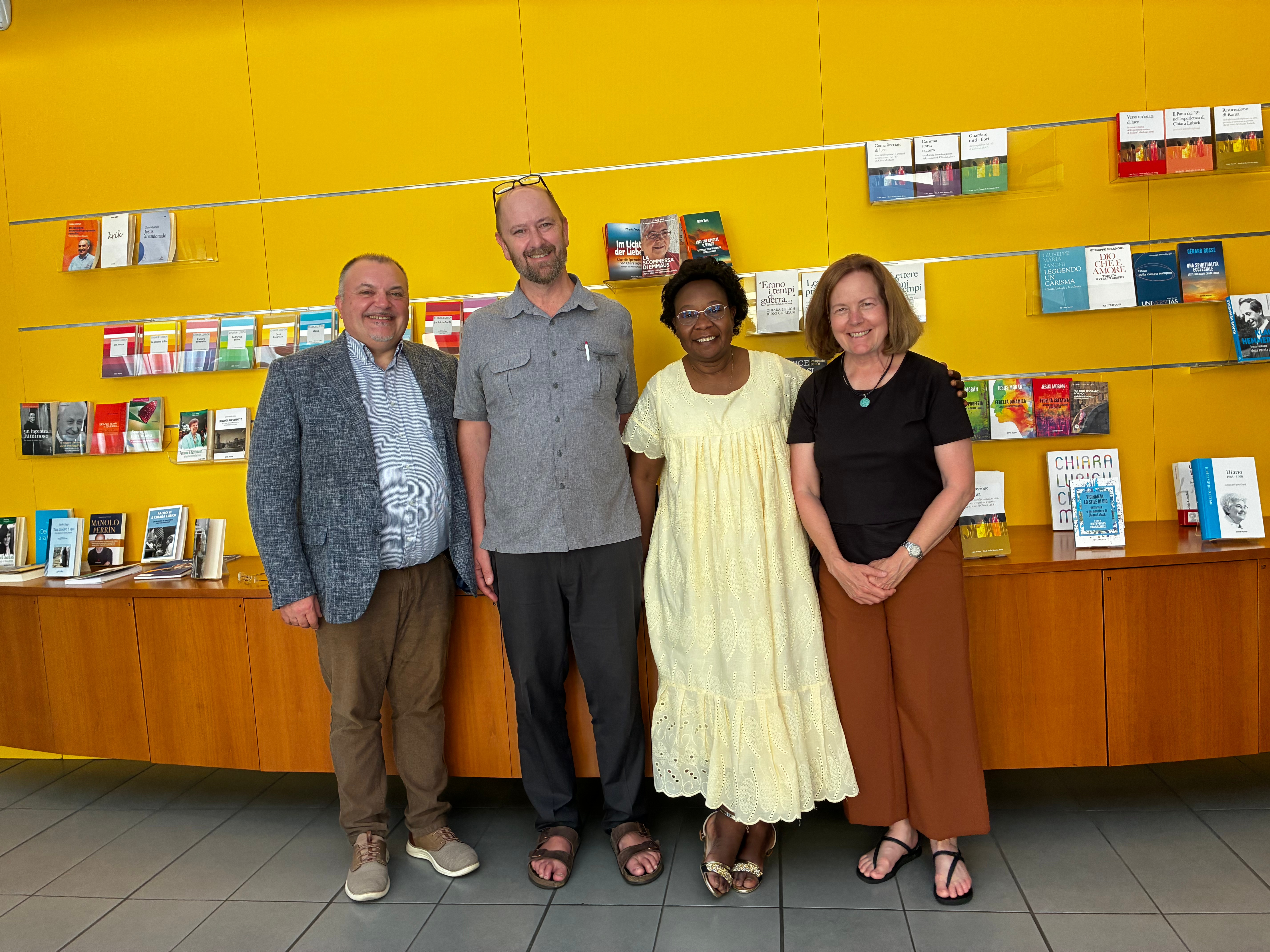
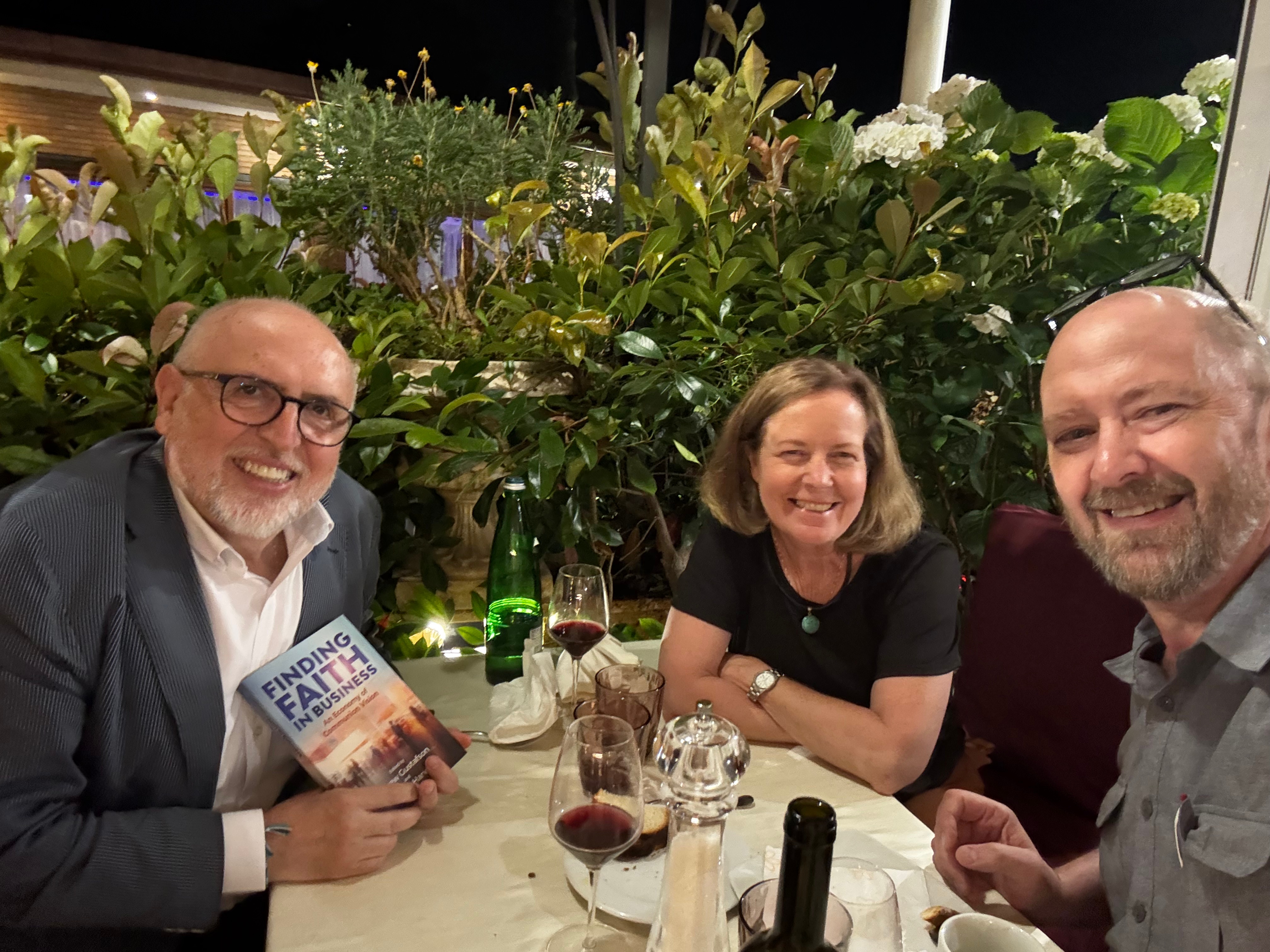
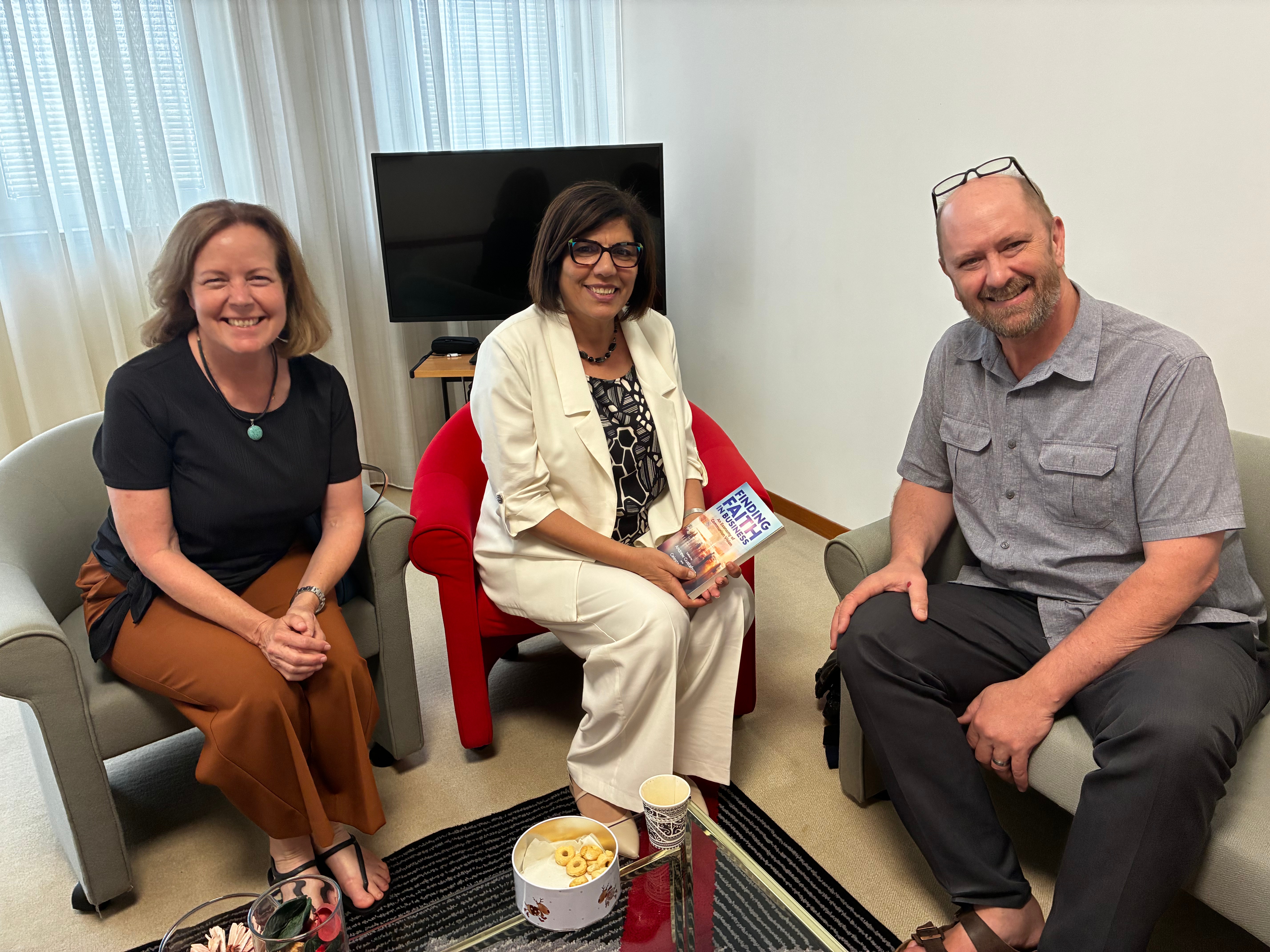
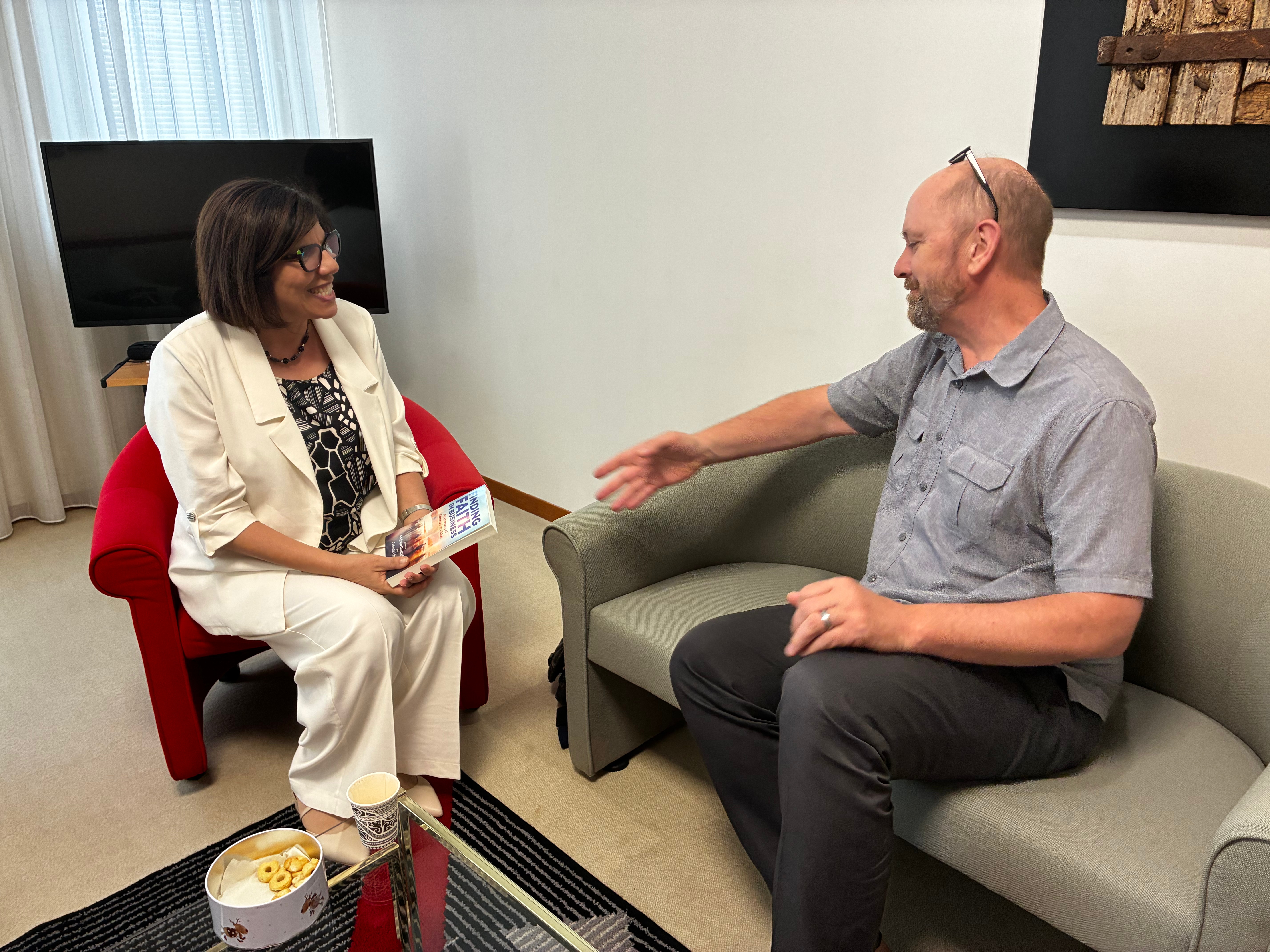
I also got to travel to Castle Gondolfo, just south of Rome, and Roca di Papa, the worldwide central headquarters of the Focolare movement, a Catholic-inspired organization who founded the Economy of Communion movement in 1991. While at Roca di Papa, I was able to meet with Margaret Karram the president of the Focolare, as well as Ruperto Battison and Genevieve Sanze who oversee the Focolare work and sharing operations worldwide. We also had supper with Jesus Moran, the president of the Economy of Communion movement. None of this would have been possible without the help and support of Loretta Raushuber, who lived in Italy for 17 years and knows everyone it seems.
I also got a chance to finally meet in person Lawrence Chong, who is one of the most active Economy of Communion entrepreneurs in the world, and co-leader of Consulsus, an international consulting group. He is fully committed to the Economy of Communion way of doing business– putting people first, and seeing business as a means to bring communion with others and social transformation. He is inspirational, and it was very interesting to hear the various leaders speak at the conference Thursday.
It was a wonderful trip (although being away from Celeste and the kids for 5 nights was tough) and I think the connections made will have a lasting and ongoing impact on my life and work.
The Business, Faith and Common Good Institute had a substantial impact on the discussions at Creighton University this last schoolyear.
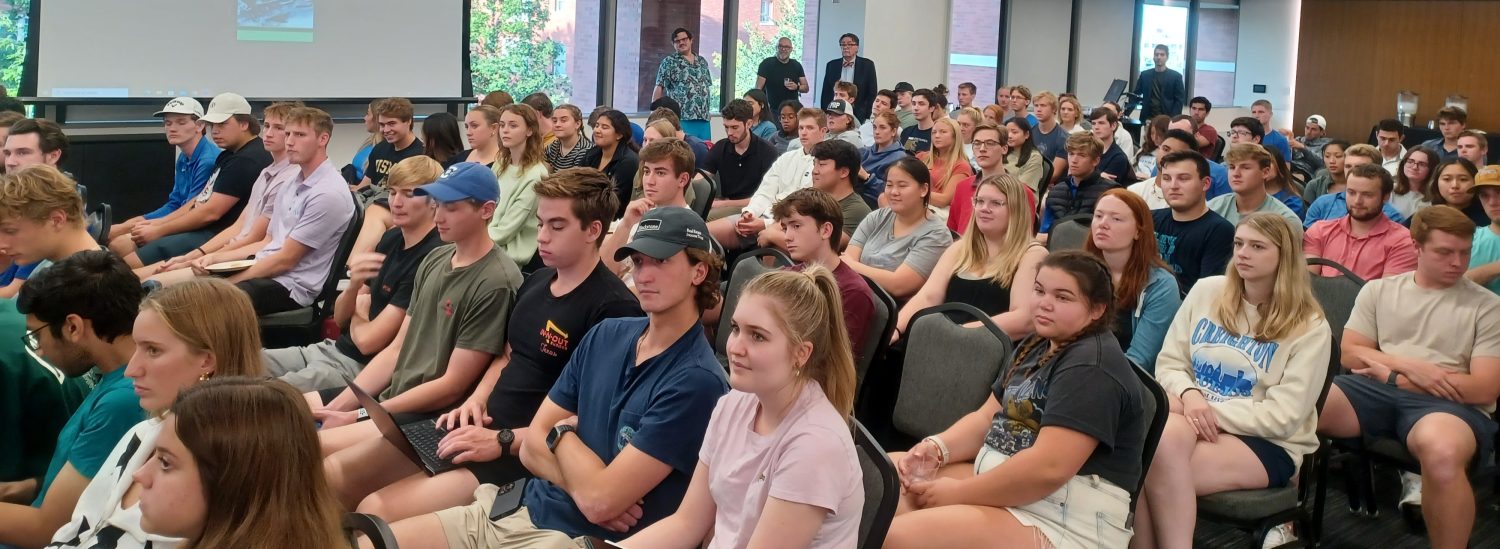
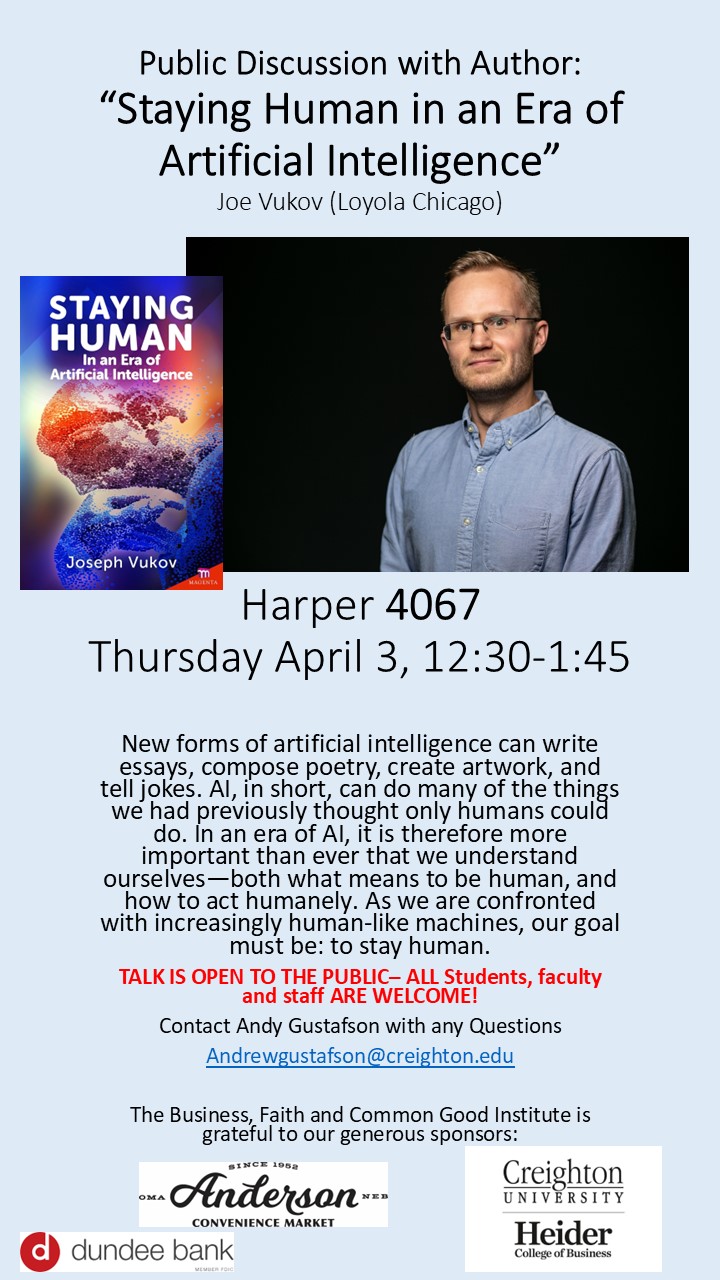
Of course our speaker series which included Andreas Widmer (Catholic University), Joe Vukov (Loyola Chicago), Alex Salter (Texas Tech) and Zach McDonald (Omaha Entrepreneur) provided wonderful public forum opportunities for students, faculty and the larger community to learn and discuss contemporary issues regarding business, faith and society.
A new and impactful piece of our curriculum development was Gustafson’s “Social Media, AI, and the Meaning of Life” course, which is aimed to help students consider and reflect and then act on the issues arising from the growing influence of social media and AI in our society. One of the most powerful assignments in the class, it turns out, was the 5 minutes of silence and nonactivity which every student was supposed to practice every single day, and then reflect and report on 3 times during the semester. Students reported that at first it was the most difficult assignment they had ever had, but then as the semester went on they reported that that 5 minutes was the time they looked forward to the most. Substantial habit changes have happened for students due to the course, each of the 3 times it has now been offered (spring 2024, fall 2024, spring 2025).
Creighton is a wonderful place to get to work at living out one’s values in business. The BFCGI is fortunate to get to have the support and freedom afforded from Creighton.
Andy Gustafson, Lead Colleague of the Business Faith and Common Good Institute
We know it feels like winter, but we have an amazing lineup of people coming as part of our BFCGI speaker series this spring! Last week former Swiss guard and entrepreneur Andreas Widmer came to campus from Catholic University and provided a fantastic discussion on faith and entrepreneurship, thanks to the generous support of Dean Tony Hendrickson and co-support from the Menards Family Center for Economic Inquiry.
We have 4 more fantastic speakers this spring– 3 speaking on AI and its effects in business and society, and another on economics and society. They are:
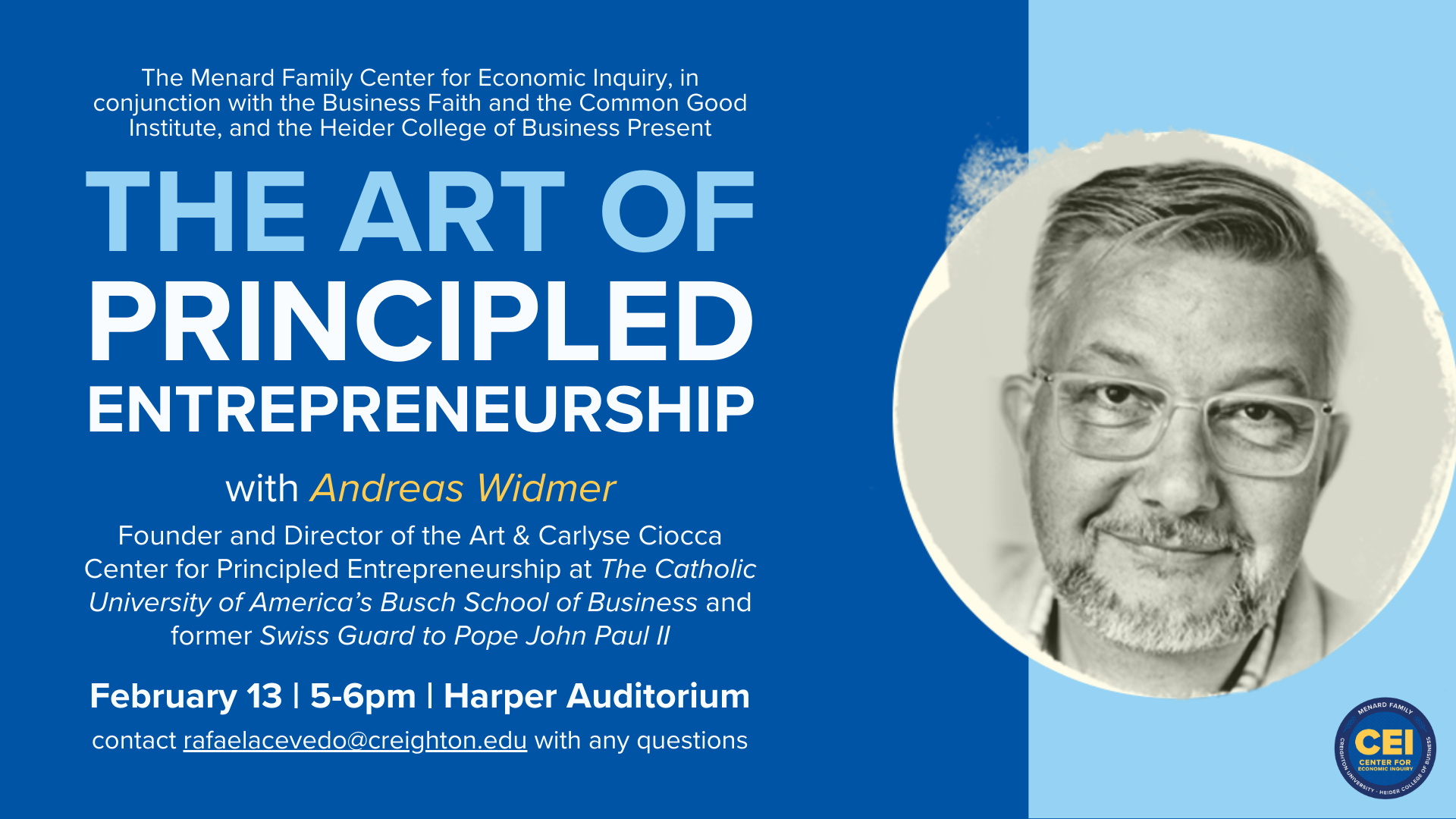
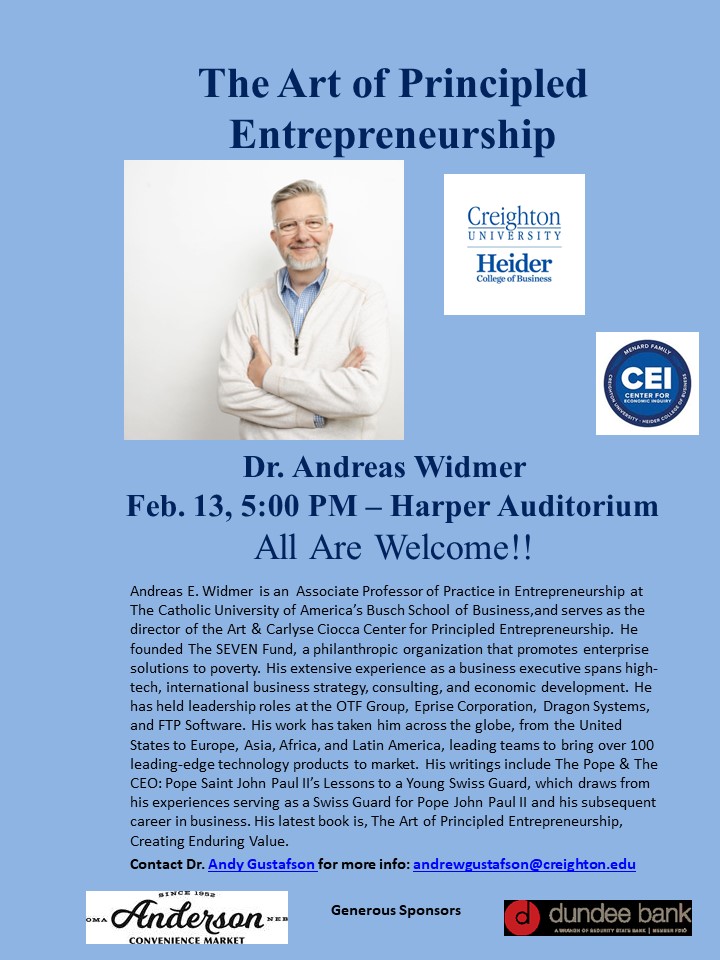
Andreas Widmer, from Catholic University, will be engage with Creighton’s own Alexei Marcoux this coming Thursday February 13th in the Auditorium at the Heider College of Business in the Harper Center at 5pm. All are welcome!
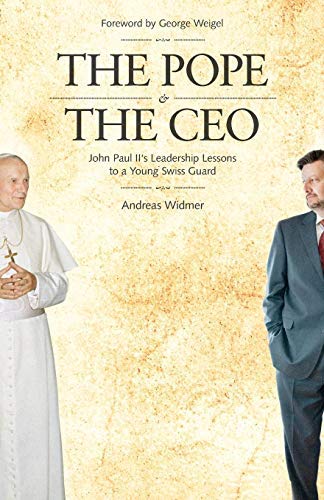
Widmer, formerly a Swiss guard at the Vatican, has a vision for entrepreneurship which brings faith directly to bear on business. His books include The Pope and the CEO as well as The Art of Principled Leadership.
These short documentaries are very well done and are quite inspirational! The Faith & Co. documentary film series and courses from Seattle Pacific University highlight the struggles and triumphs of people living out business as their calling. Filmed across three continents in a wide range of industries, these inspiring examples provoke questions and provide insights about how to act as a faithful follower of Christ in business. Check it out here: https://faithandco.spu.edu/
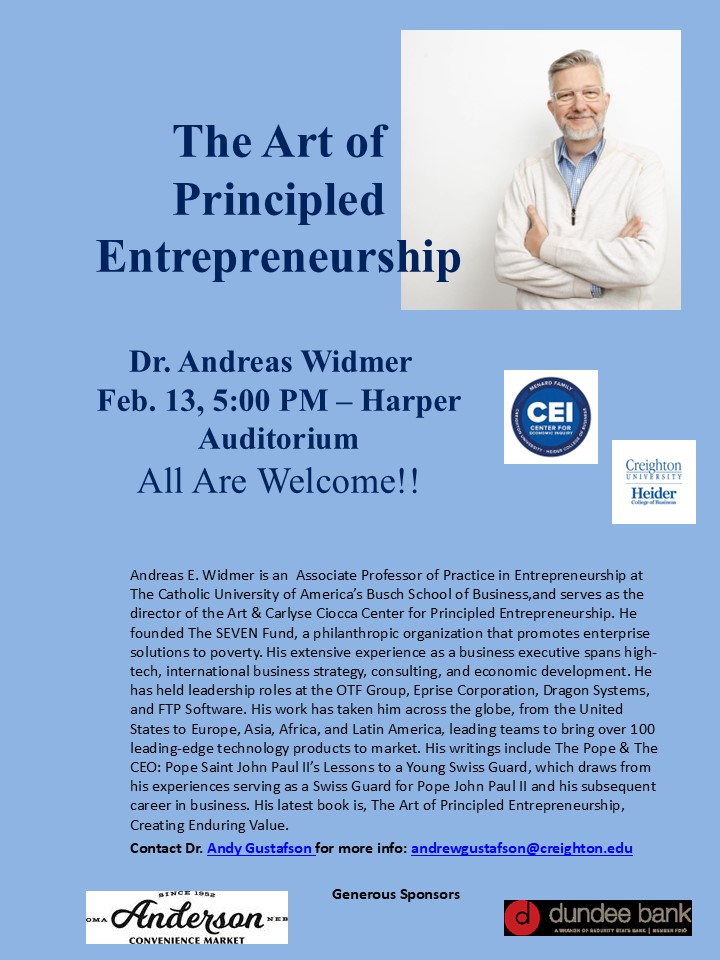
Please join us for a unique opportunity! Business, Faith and the Common Good and the Menard Family Center for Economic Inquiry are bringing Dr. Andreas Widmer, Associate Professor of Entrepreneurship and Director of the Art & Carlyse Ciocca Center for Principled Entrepreneurship at the Catholic University of America to Creighton, with generous help from the Heider College of Business and other sponsors.
We are very excited about this year’s Business, Faith and Common Good Speaker Series! We have a wide range of experts coming to help our students think about business and the common good, ranging from the role of AI in the fields of Law, Medicine, and business, as well as nationally known experts in the fields of economics, entrepreneurship and Catholic thought.
Many thanks to our sponsors for their support in helping the Creighton Community host these public discussions.
Joe Vukov (Loyola-Chicago)
Joe Vukov is associate professor of philosophy at Loyola Chicago, where he serves as Associate Director of The Hank Center for the Catholic Intellectual Heritage. His research explores questions at the intersection of ethics and the cognitive sciences, and at the intersection of science and religion. He is author of 3 books, including Staying Human in an Era of Artificial Intelligence, in which he argues that AI lacks the embodiment which is such a crucial aspect of human life.
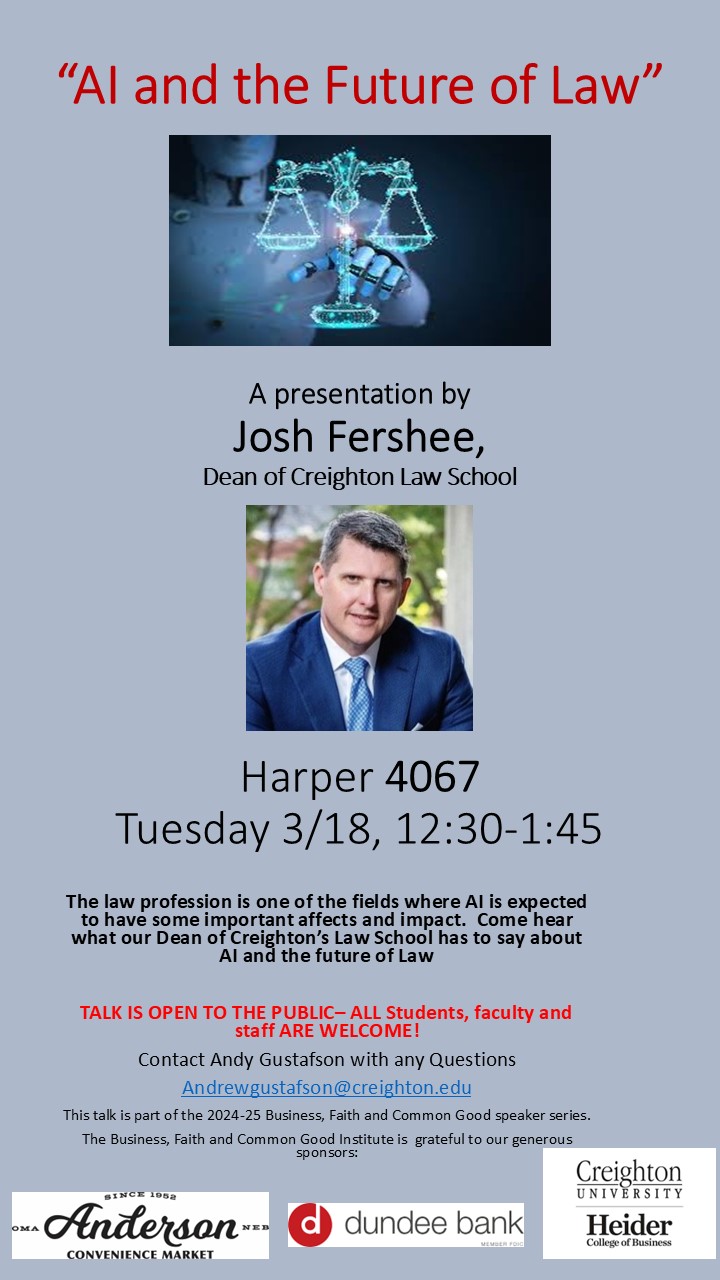
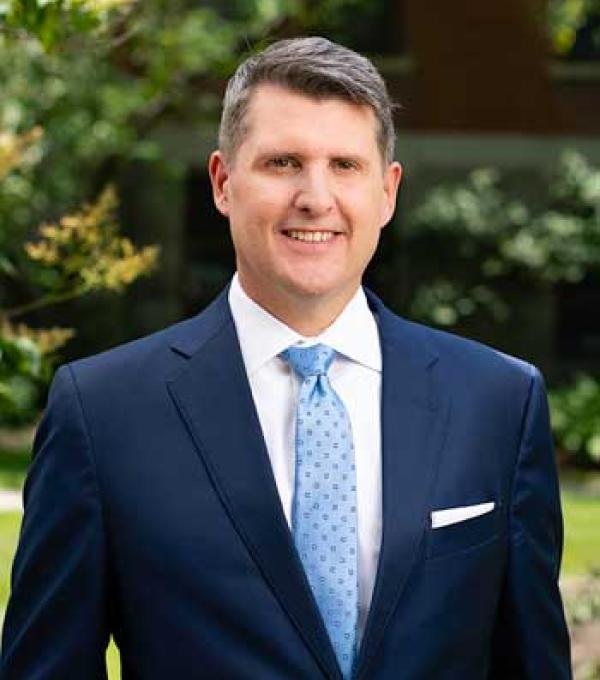
Joshua Fershée, JD, became the 11th dean of the Creighton University School of Law on July 1, 2019. Fershée previously served as associate dean for faculty research and development, professor of law, and director of LLM programs at West Virginia University College of Law.
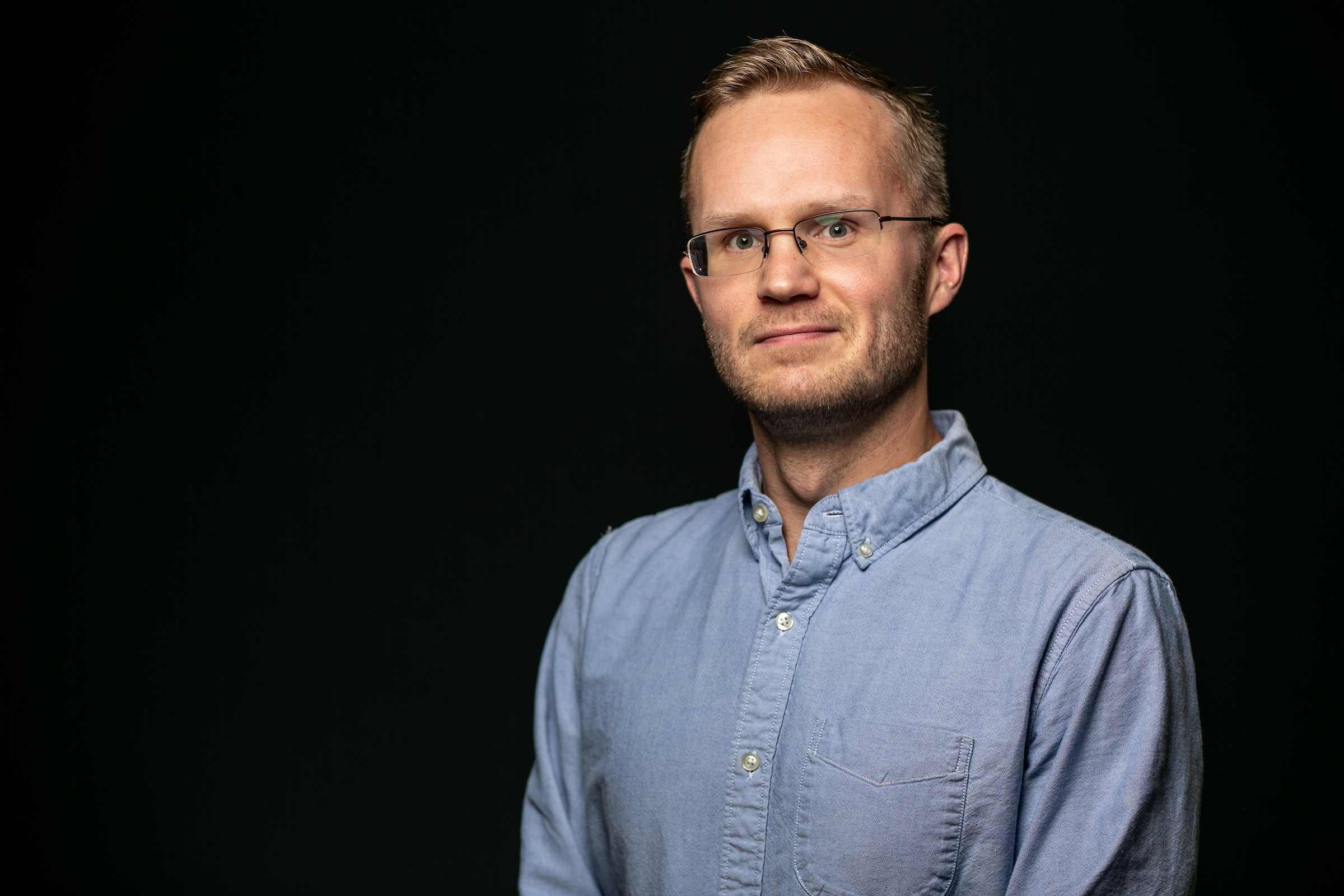
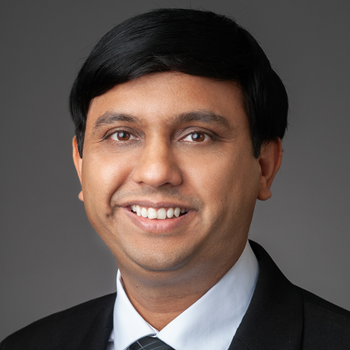
Steven Fernandes (Computer Science, Creighton U.) Building Robust AI Models
Dr. Steven Fernandes specializes in artificial intelligence, with a focus on deep neural networks, computer vision, and medical image processing. His research primarily revolves around the development and application of novel AI methodologies to enhance the accuracy and robustness of outputs from deep neural networks. A key area of his work involves creating metrics, such as the attribution-based confidence metric, which assess the trustworthiness of outputs from deep neural networks. Some of his work has been used in the field of medicine, demonstrating the value and impact of AI for medicine.
Andreas Widmer (Catholic U. of America)
Andreas Widmer was a Swiss Guard at the Vatican for Pope John Paul II, and wrote a book about lessons he learned there entitled, The Pope and the Ceo . He is an entrepreneur and venture capitalist, and teaches at Catholic University of America. His most recent book is The Art of Principled Entrepreneurship: Creating Enduring Value
Elisabeth Kincaid (Baylor)
Elisabeth Kincaid is associate professor of ethics, faith and culture in Baylor’s George W. Truett Theological Seminary, affiliate member in the Department of Management, and Director of Baylor’s Institute of Faith and Learning. She previously held the Legendre-Soule Chair in Ethics at the College of Business in Loyola University New Orleans where she was director of the Center for Ethics and Economic Justice.
Jordan Magnuson is currently Senior Lecturer in Games and Media Art at the University of Southampton, and 2024-25 Fulbright Scholar in Digital Media at the University of Bergen. His recently published book, Game Poems: Videogame Design as Lyric Practice (Amherst College Press, 2023), is a deeply interdisciplinary look at the potential convergences between game making and lyric poetry, and has been praised by a wide-range of scholars, game designers, and poets. Jordan started his first indie games company in 1999, and in 2005 he founded The Independent Gaming Source (TIGSource.com), a community site for indie game developers which became the birthplace of a generation of innovative indie titles such as Fez, Spelunky, Papers Please, and Minecraft.
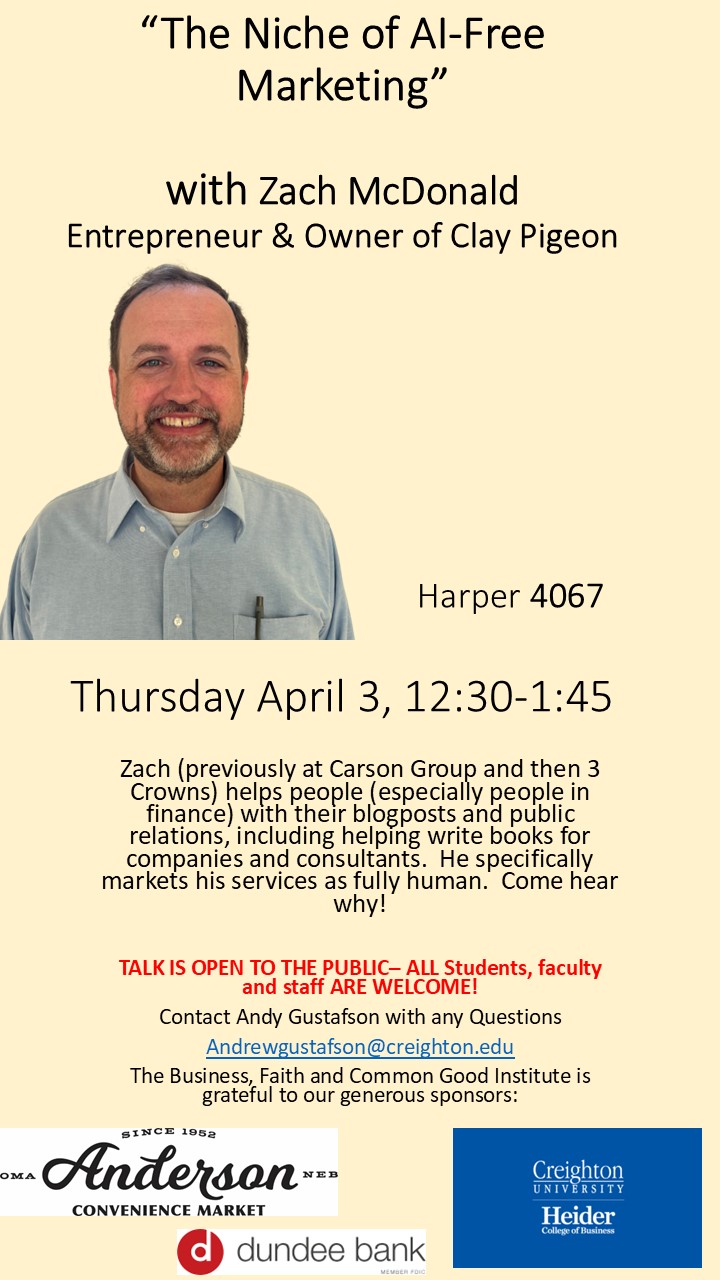
Zach McDonald (entrepreneur)
Zach McDonald is former President of Three Crowns, a marketing company in Omaha. He recently founded his own company, Clay Pigeon Communications, and he is quite interested in AI and other technologies and their effects on business and society.
Jordan Magnuson, Senior Lecturer at Southhampton University, UK spoke with students in the AI, Social Media, and the Meaning of Life class at Heider College of Business on April 23 about his work and the concept of thinking about creating games as a form of poetry. Jordan is the author of Game Poems: Videogame Design as Lyric Practice (Amherst College Press, 2023) and a longtime video game creator. In 2005 he founded The Independent Gaming Source (TIGSource.com), a community site focused on fostering an “arthouse” ethos among indie game developers. Since 2010, Jordan’s serious games, art games, “notgames,” and “game poems” have been featured by Wired, PC Gamer, Le Monde, and others, shown at festivals and exhibitions around the world, nominated for various awards including the New Media Writing Prize and the IndieCade Grand Jury Award, and cited by a wide range of creators and scholars (e.g. his travel games project, “Gametrekking,” is mentioned in the Cambridge History of Travel Writing).
Jordan is particularly interested in using the most basic elements of interaction, computation, and representation to craft meaning and impact in videogames, and in using games to tackle difficult topics, subjective experiences, and complex emotions. He has lectured on critical and experimental game design at many of the top game programs around the United States (including USC, The DigiPen Institute of Technology, The University of Utah, UC Santa Cruz, and MIT), as well as at venues such as GDC, IndieCade, and Google. He has also collaborated with faculty and students at a variety of institutions to adapt and utilize his games in the context of interdisciplinary research (e.g. a game-based psychology study with Kipling Williams of Purdue University). Examples of Jordan’s work and games can be found at his site https://www.jordanmagnuson.com/bio One of his most provocative games is ‘loneliness’ which can be found here: https://youtu.be/Ne7L7byleDw .
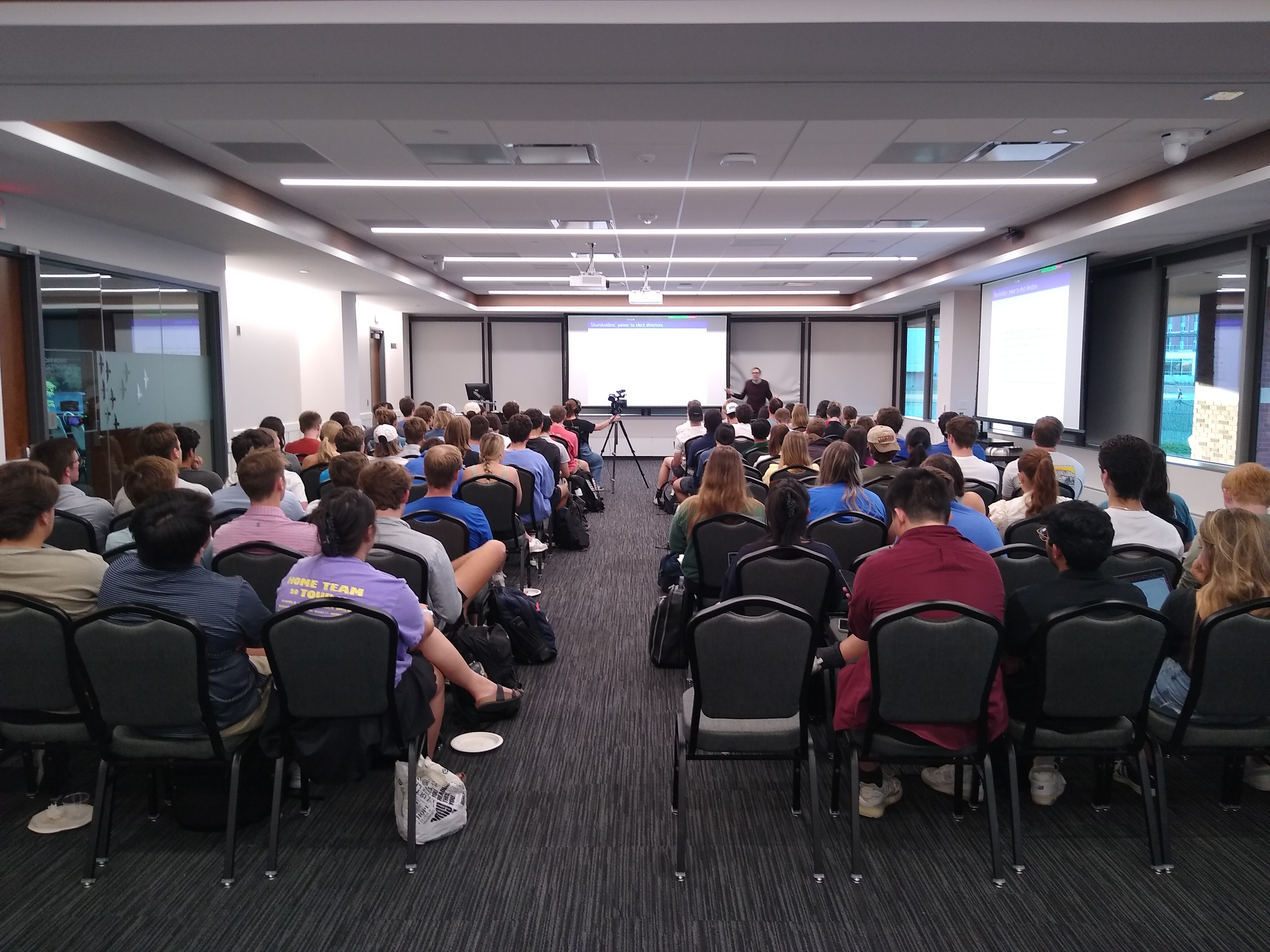
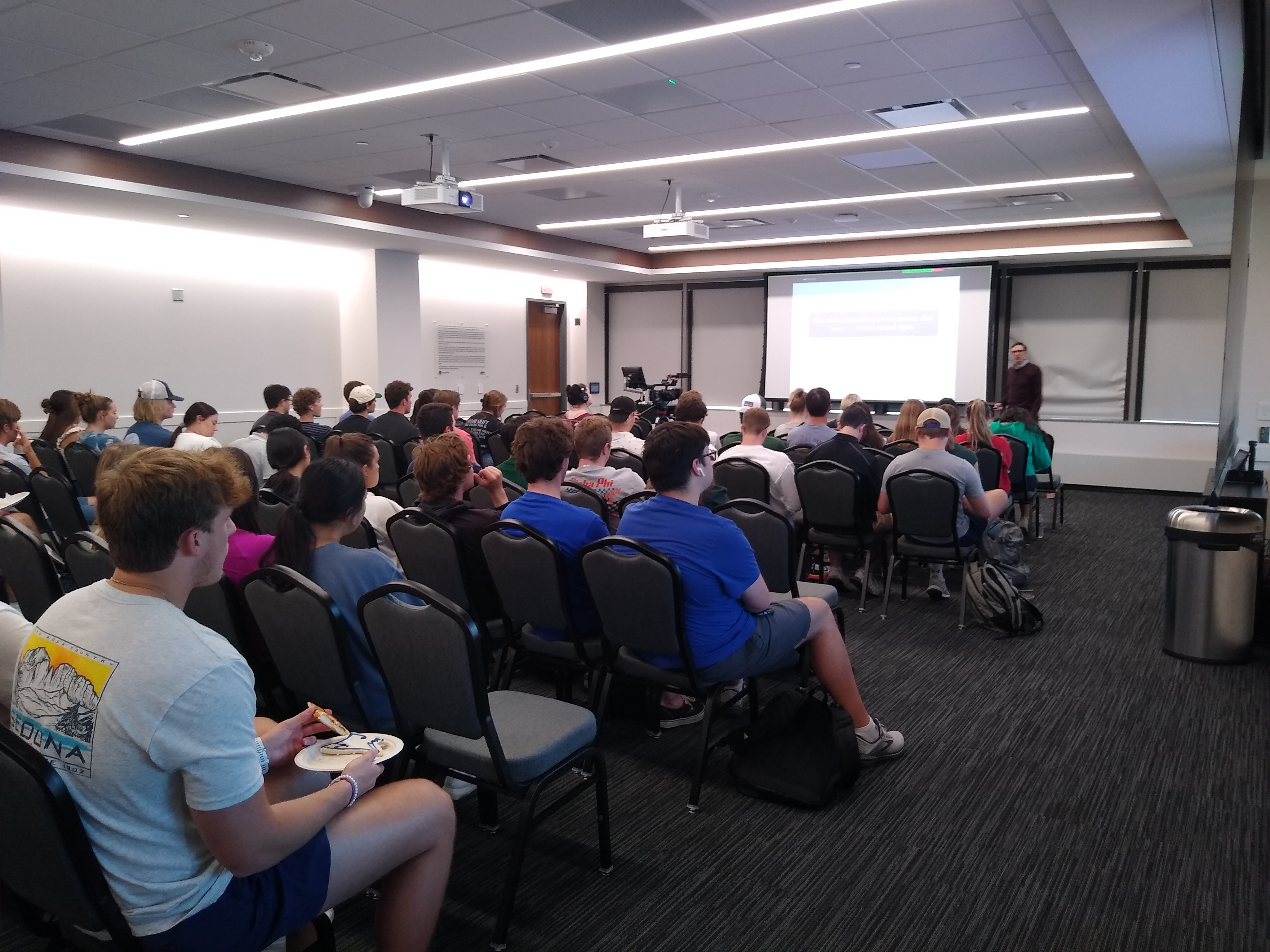
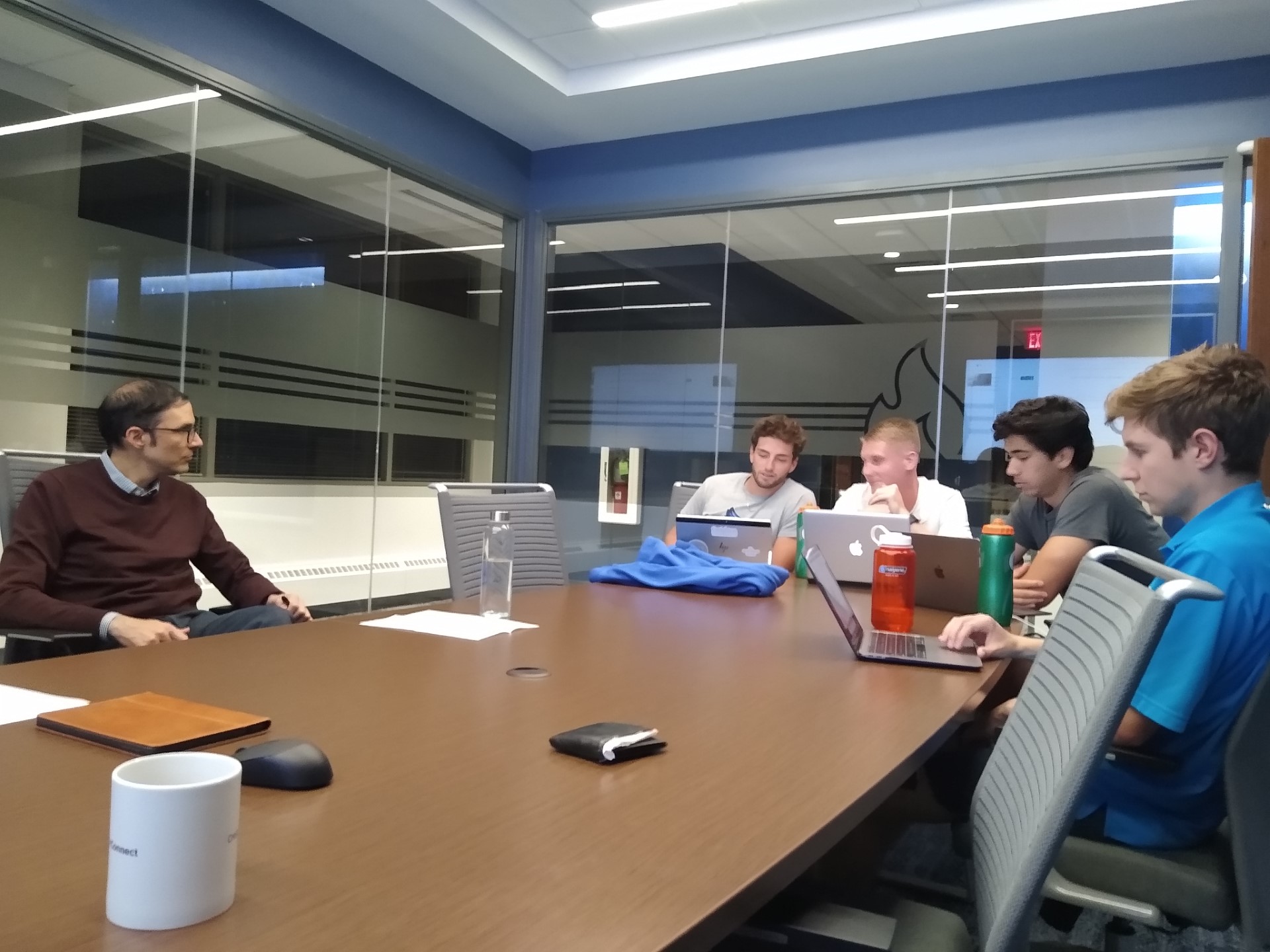
Santiago Meija, is a professor in the business school at Fordham University in the Ethics and Law department, and a well published business ethicist. He holds the William J. Loschert Endowed Chair of Social Entrepreneurship, and his research focuses on corporate governance, moral psychology, organizational behavior and virtue ethics. He made a presentation at the Heider College of Business at Creighton University on September 28, 2023 and then met with our Business, Faith and Common Good seminar class about corporate ownership and the common good.












 Business, Faith, and the Common Good Institute