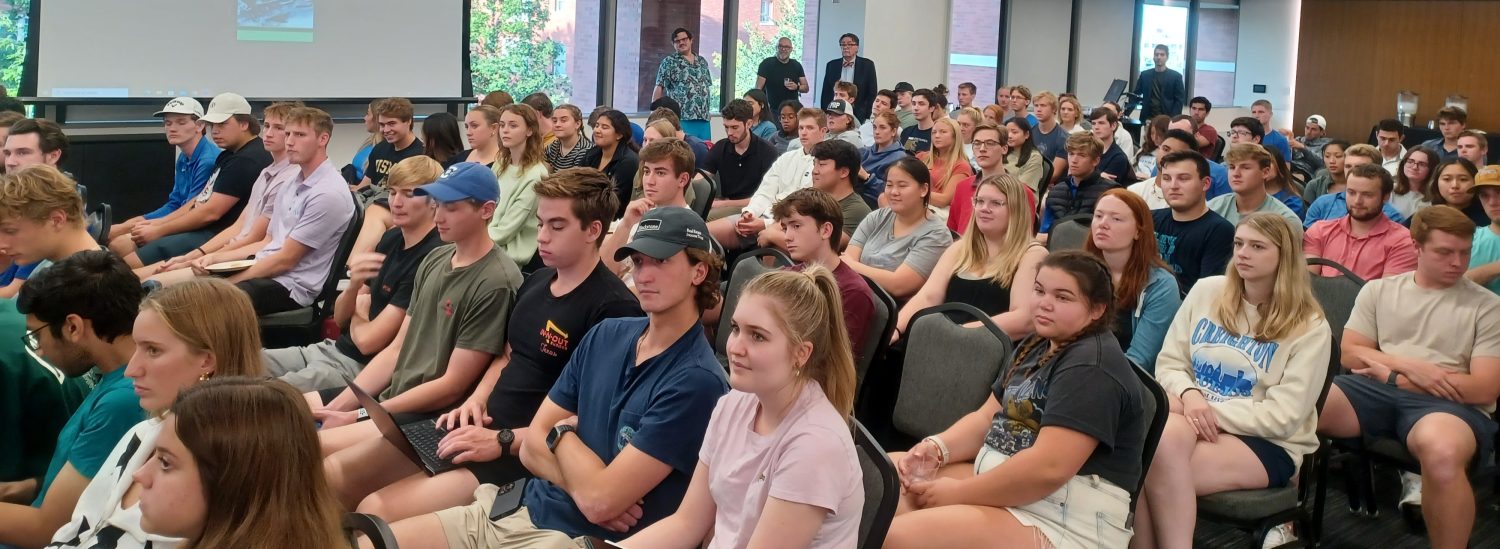
The fall speaker series for 2022 has been set, and it should be very interesting, covering topics of financial advising and the common good, Catholic economics, Entrepreneurship and faith, how to navigate one’s calling, the effects of investors on the single family housing market, and finally a symposium with keynote speaker Richard T. DeGeorge, reknown business ethicist.
All talks are open to the public. All are in the Harper Center on Creighton’s Campus. Most are 6-7 pm.
Here is the schedule:
September 15th Financial Advising and the Common Good (Panel) (6-7pm Harper 4068/69)
9/20 Tony Annett “Cathonomics” 7-9 Harper 2045/2046 [Markoe-DePorres Annual Lecture]
Tony Annett (Fordham U) worked for the International Monetary Fund for 14 years, and is the author of “Cathonomics” which puts forward a view of how Catholic Thinking should impact our economic thought. (co-sponsored with the Peace and Justice Studies Program)
9/22 Ross Emmet (ASU) “Entrepreneurship: A Faith Perspective” (6-7pm, UP Room)
Emmet is Director of the ASU Center for the Study of Economic Liberty, and widely published expert economist (Co-Sponsored with Creighton’s Institute for Economic Inquiry)
9/29 Luke Bobo & Paige Wiley “Worked Up: Navigating Calling after College” 6-7pm (3047)
Bobo and Wiley will help students consider how to navigatepost-college decisions. They came last year and were great.
10/6 The Effects of Investors buying Into SFH Market (6-7pm in 3047)
This will be a panel of local real estate and housing specialists discussing the current Single-Family Housing Market
10/20 Carson Young “Good Business, Profit, and Ethics” (6-7pm UP Room/2060)
Young is an up and coming Business Ethicist from Suny-Binghamton (Co-Sponsored with Creighton’s Institute for Economic Inquiry)
10/27 Symposium UP room: Richard T. DeGeorge “What is the Common Good?” Reception to follow.
DeGeorge is a world famous business ethicist, and the author of 20 books and over 220 articles mostly on business ethics. He comes to us from the University of Kansas.\
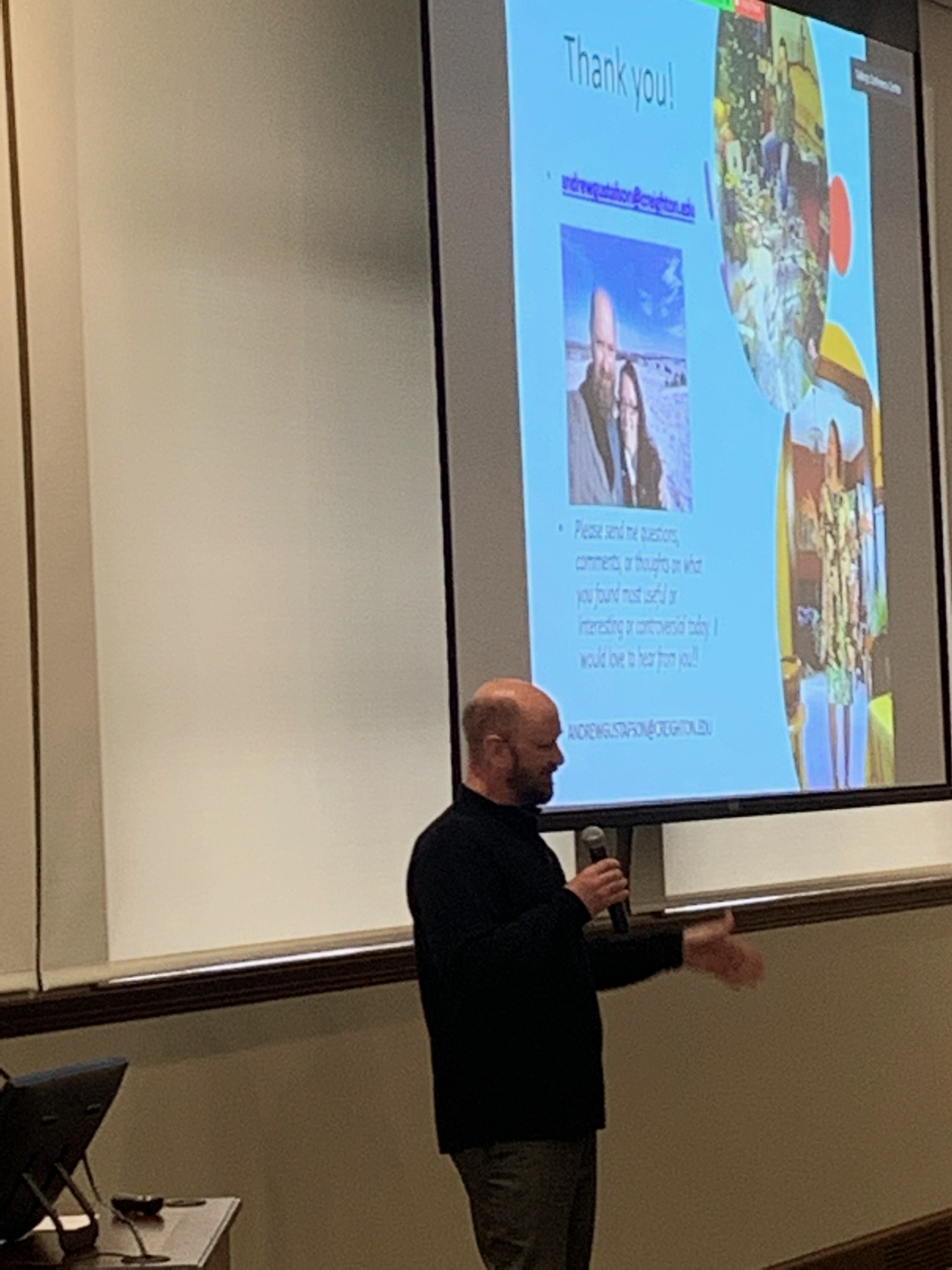
All talks are open to the public. All are in the Harper Center on Creighton’s Campus. Most are 6-7 pm. If you have any concerns or questions, please contact Andy Gustafson at andrewgustafson@creighton.edu
BFCGI Colleagues Andy Gustafson and Celeste Harvey will be presenting at a variety of conferences this summer:
Writing papers!!!!
Harvey will present her paper, “Luxury: The Forgotten Vice” at the North American Association of Social and Political Philosophy at Neuman University in Philadelphia in July.
Harvey and Gustafson’s paper “How many Houses Should One Person Own?: A Distributivist Critique of multiple house ownership and its effects on the current housing market” with Fr. Nicky Santos at the Colleagues in Jesuit Business Education conference at Georgetown in Washington DC in July.
Harvey and Gustafson’s paper “Humanistic Management and the Economy of Communion Movement” at the International Society of Business Ethics and Economics conference in Bilbao, Spain in July
Gustafson’s paper “Why Utilitarianism Is So Neglected In the Field of Business Ethics, And What to Do About It” at the International Society of Business Ethics and Economics conference in Bilbao Spain in July.
Gustafson’s paper, “(The Sorry State of) Utilitarianism In the Field of Business Ethics: Why It Is Neglected, and Opportunities for Research” at the Society of Business Ethics conference in Seattle in August.
Gustafson and Harvey’s paper, “The Economy of Communion Movement as Humanistic Management” at the Academy of Management Conference in Seattle in August.
John Gallagher, a BFCGI colleague, has come to speak to Creighton students on a number of occasions over the years, particularly about his research on the Economy of Communion. Andy Gustafson met John when they attended a Ryan Center conference on Faith and Business in Manilla, Philippines in 2015, and they found many mutual interests. John invited Andy to the EOC conference that summer in Washington DC, and that is when Andy joined the EOC as an entrepreneurial member. John published a book on the EOC companies in North America and their distinctives called “Structures of Grace: The Business Practices of the Economy of Communion” John will be retiring at the end of this semester, and this Thursday he will be giving his ‘last lecture’ which will be held in the auditorium at school and attended by faculty and students and alum.
From the Maryville website: Retiring management professor John Gallagher to give retirement speech”:
Since 2007, Dr. Gallagher has been involved in researching the business practices of companies that participate in the Economy of Communion, a worldwide movement with goals of using private enterprise to address social problems. In 2014, he and Dr. Jeanne Buckeye from the University of St. Thomas in St. Paul, Minnesota, published the book “Structures of Grace: Business Practices of the Economy of Communion,” and the principles explored, he said, dovetail with his liberal arts approach to teaching.
“In my mind, what that means is an emphasis on the sociological aspects of business,” he said. “That’s not to ignore the economic aspects, but one of the exercises I have used in class and some other settings is to ask the students to identify their worst experiences as an employee as well as their best. And for the next set of questions, I ask them about the worst and best experiences they’ve ever had as customers.
“When the students tell me, ‘Here’s an experience I’ve had,’ I push them: Why was that so bad? How did that experience make you feel?’ And I do the same with the good experiences, and invariably, in all cases, it comes down, essentially, to either an assault on, or an affirmation of, their fundamental dignity. It always comes down to questions of respect.”
That, he added, illuminates the human dimension of management and business — equally as important as financial principles and basic tenets of economics. And because those experiences of respect and affirmation — or the lack thereof — are universal, they become the building blocks upon which the rest of the coursework can be instructed.
“If we understand that dimension of it, the rest of it stands to follow. Instead of asking, ‘What do we know about organizations?,’ we’re asking, ‘What do we know about human behavior and organizations? What do we know about human behavior in other dimensions?’” he said. “Well, we know there’s such a thing as dysfunctional organizations, and we know what makes them less functional or more functional. Even a core course like the Principles of Finance has a human dimension to it, because an organization’s financial statements tell a story about what’s important to that organization and what that organization values.”
As for Gallagher’s ‘final lecture’ on Thursday, The working title, he added, is “Things Not Yet Said” — a bit cryptic, he acknowledged with a grin, but that’s by design. It will, however, be a celebration of Maryville College, he added.
“One of the things I value about the College is the opportunity we all have to sort of say our piece, both in our words and in our actions over the course of the time we’re here. At the same time, the College has given me a lot, so it’s an act of gratitude in some ways.”
He has no firm retirement plans — “I’m not a believer in a compartmentalized life, and I’ve already traveled a bit,” he said — he and his wife, Patricia, have plenty to keep them occupied, with 12 grandchildren and several step-grandchildren and great-grandchildren. And while he’s stepping away from the classroom, he and Patricia live nearby, and the same campus walks that first attracted him to Maryville College will certainly be a part of his life after retirement.
“I think there is an aura about particular places, geographical places, and this is one of them,” he said. “Exactly what that aura is, I don’t know if I can put that into words … whether it’s the view of the mountains or whether it’s the symmetry of the campus, it’s a very welcoming space, and at the same time, it’s an expansive space.
“And then there’s the fact that it’s a college campus, and that’s always been a special environment to me. I almost always enjoy being on a college campus, knowing what goes on there, and I’m glad to have found a place for myself at Maryville College.”
For those unable to attend Gallagher’s Last Lecture, the talk will be streamed live on the College’s Facebook page. A reception will follow in the William Baxter Lee Grand Foyer of the Clayton Center.
In lieu of congratulatory gifts, Dr. Gallagher has requested that donations be made to support global education. Gifts of any size are welcomed and can be made online at http://maryvillecollege.edu/givetoday. Be sure to add “Dr. John Gallagher’s retirement” in the comment box under “gift preferences.” If you would like to contribute in another way, please contact Eric Bellah at eric.bellah@maryvillecollege.edu or 865-981-8225.
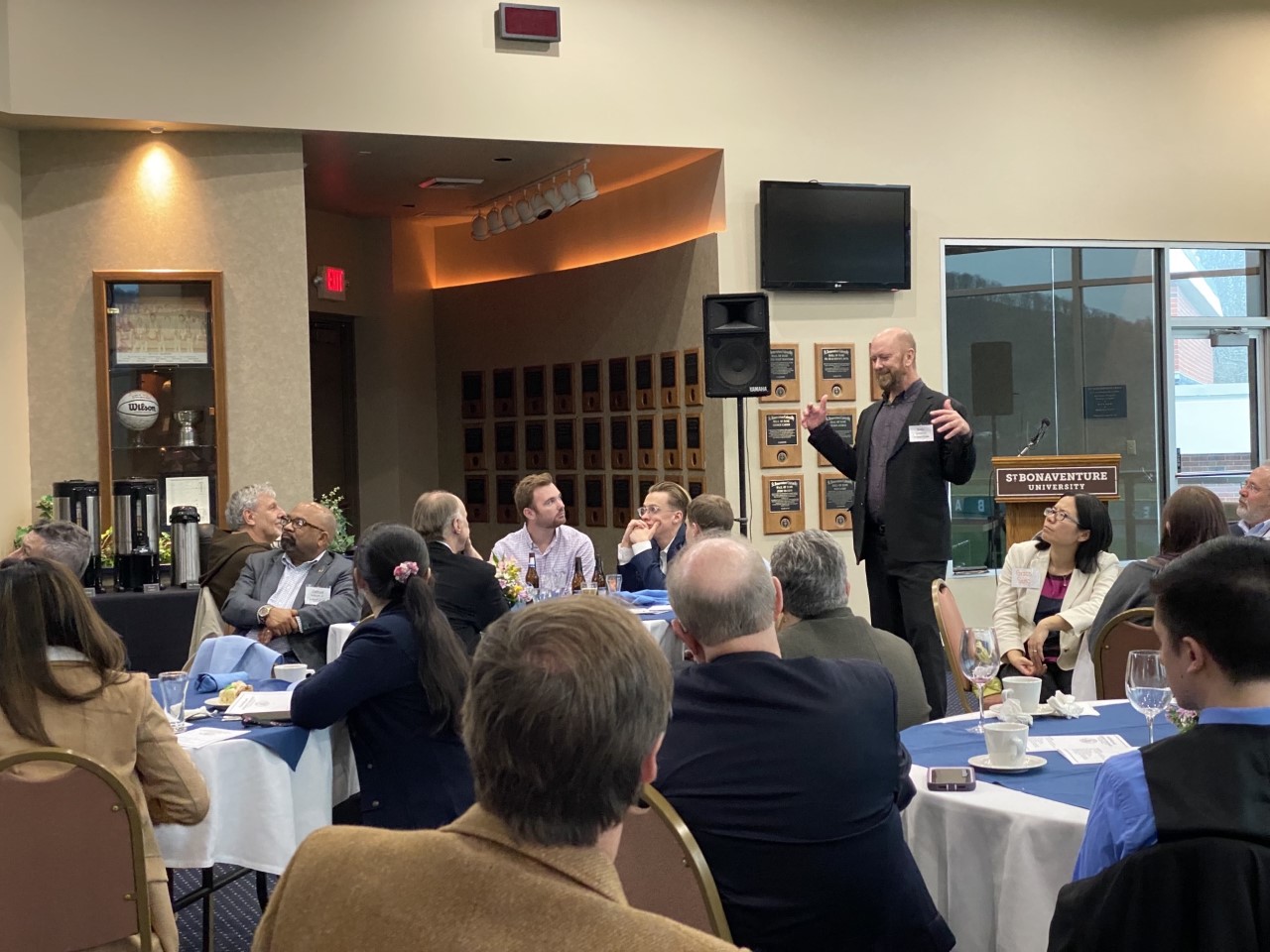
The Foster Center for Responsible Leadership at Bonaventure University hosted a conference April 8-9th to “explore the impact on society of our ever-increasing digital world”. Conference participants came from a variety of institutions including Cardinal Stritch U, St. Francis University, Wagner College, Harvard, and Maryville College, among others. Michael Gallagher, the director of the Foster Center planned and organized the conference. Being a Franciscan school, Bonaventure U is among more than 20 Franciscan universities across the US.
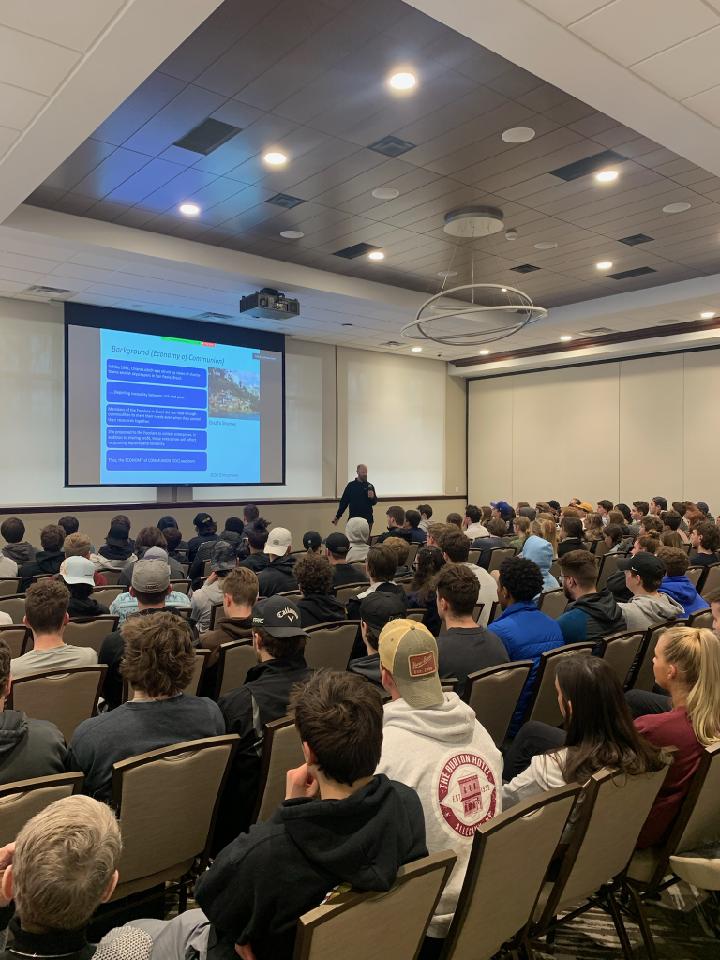
BFCGI director Andy Gustafson gave the opening talk on Friday night entitled ““Authentic Human Leadership and the Common Good (in an Age of AI, Zoom Meetings, and Virtual Society)”. He challenged the professors and administrators there to work to help re-establish strong community at their institutions very intentionally in the face of some of the bad habits many of us have probably fallen into during covid. He also challenged people to help students consider how to use social media, AI and big data for the common good and glory of God (AMDG). Gustafson also had opportunity to speak to about 300 students and faculty on Thursday, sharing how he tries to do good while making a profit with his property restoration and rental business in Omaha.
Marquette University has a new center for data, ethics, and society, directed by Michael Zimmer. It is designed to help foster cross-disciplinary collaboration among faculty at Marquette, and to help bring uniquely Jesuit and Catholic wisdom to bear on big data and technology issues of our day.
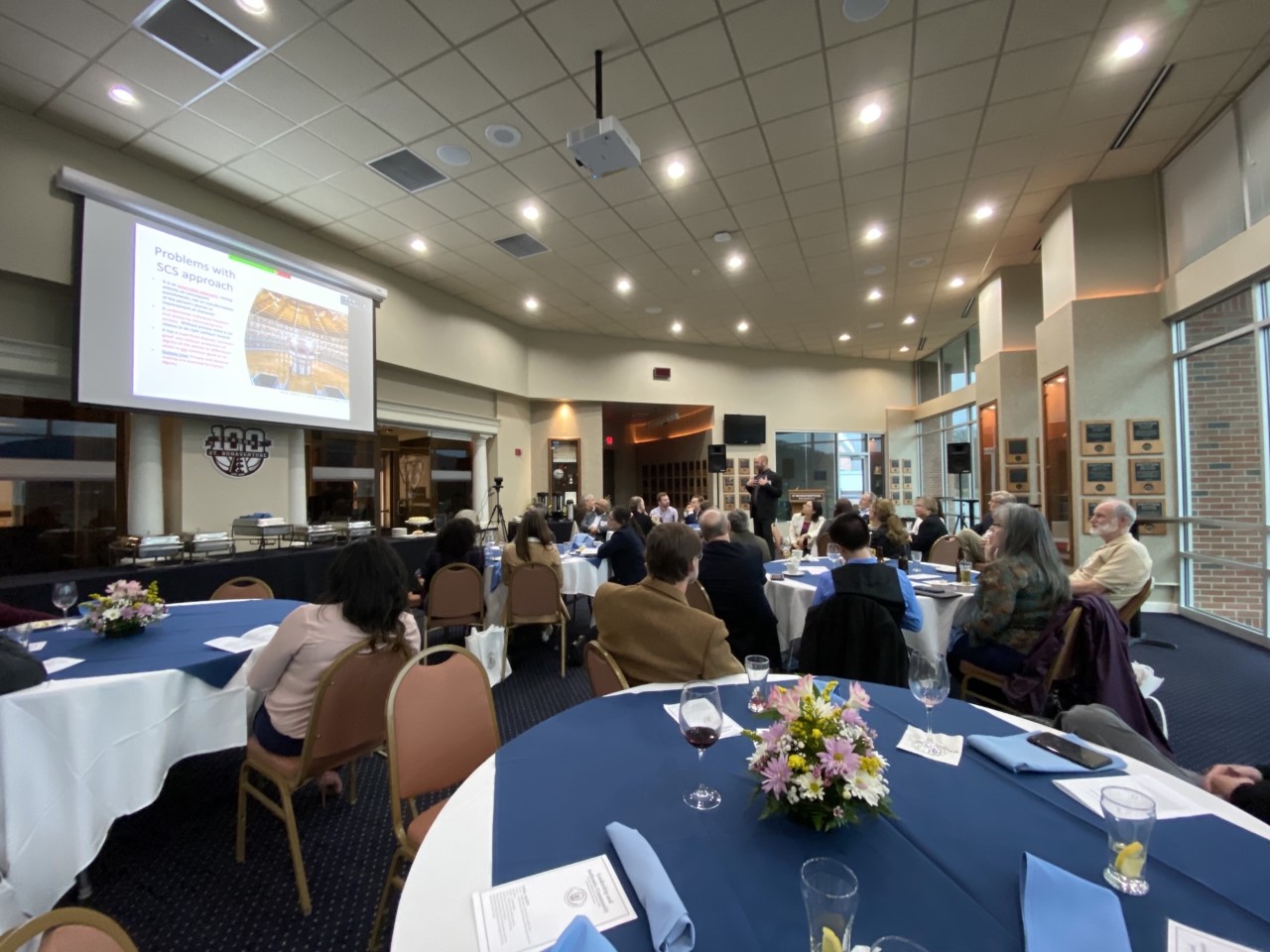
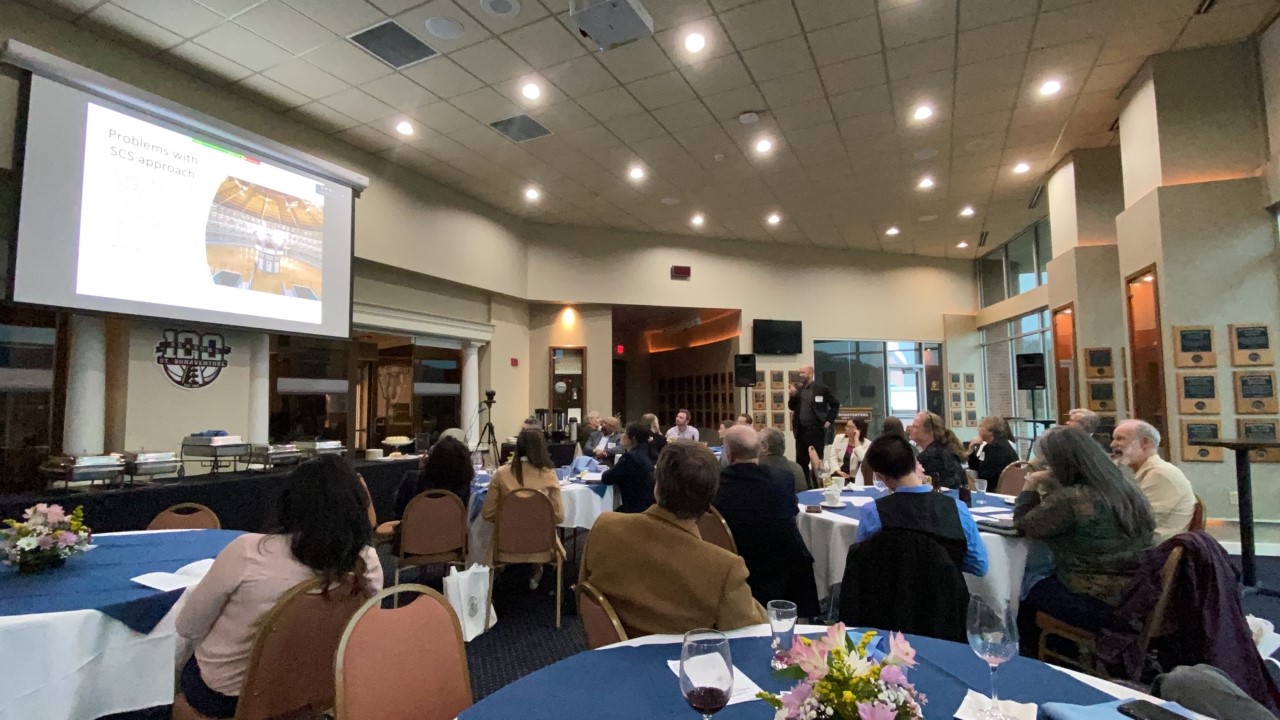
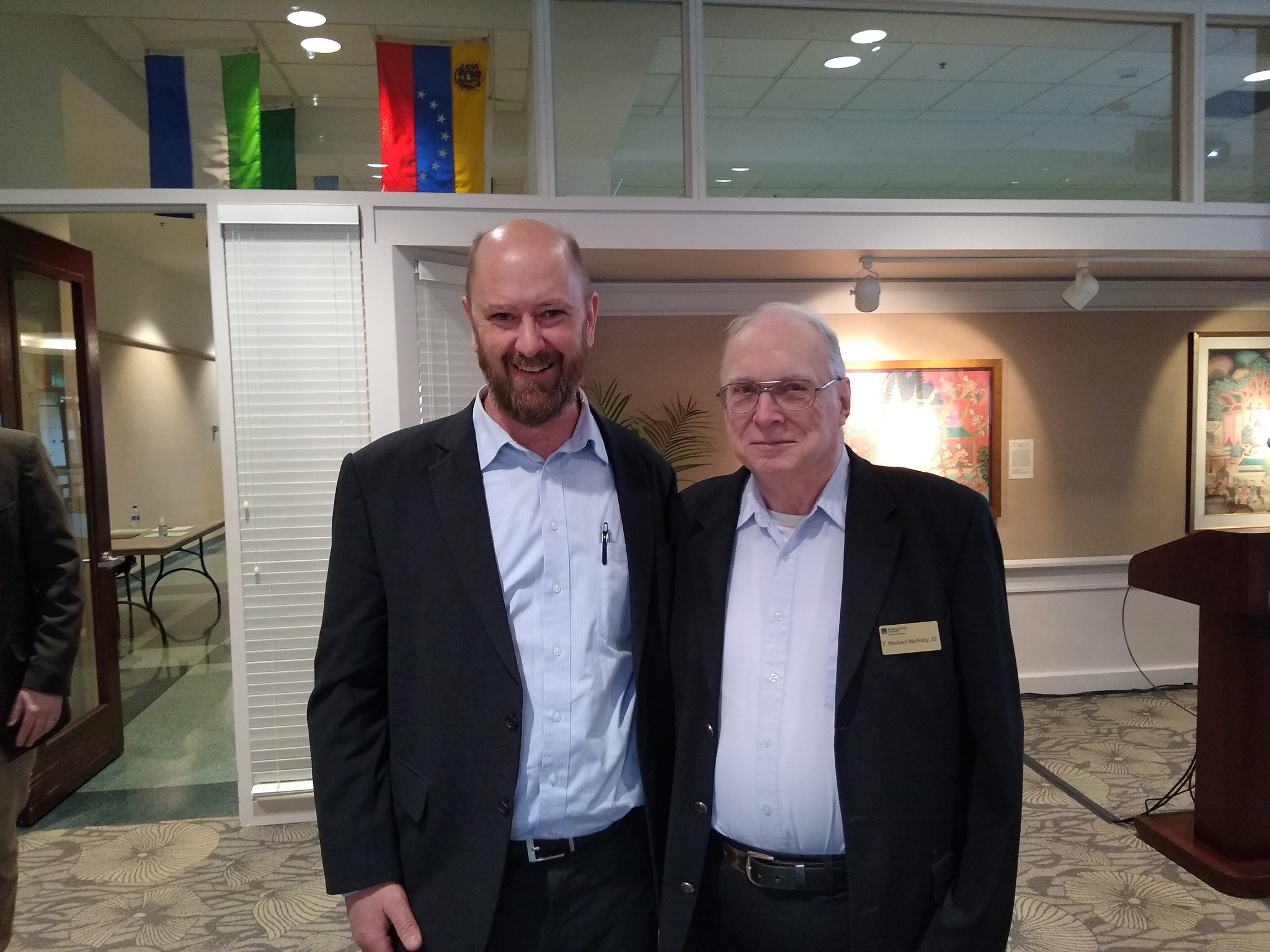
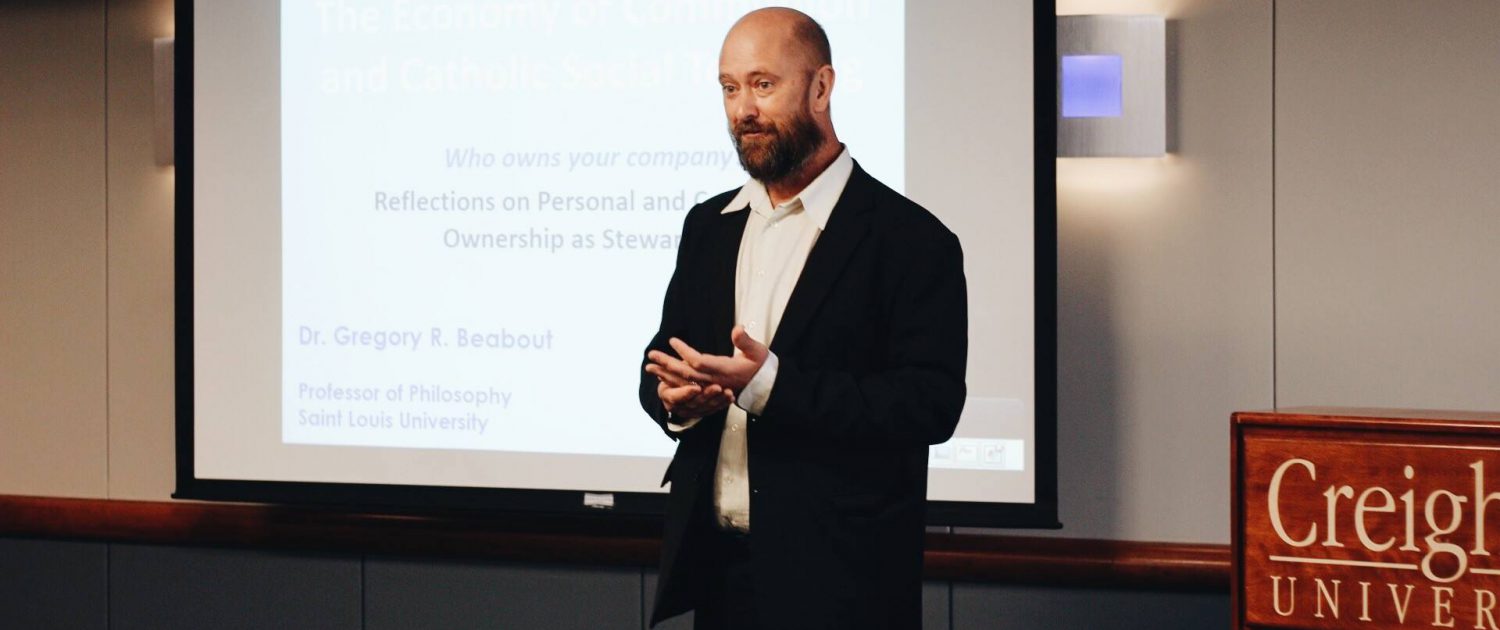
BFCGI Director Andy Gustafson provided an initial talk on “Ignatian Concerns Regarding Data Ethics and Society” on April 4th, followed by a panel of Marquette faculty from political science, theology, computer science, business, the law school, and the library. It was great for him to get to go back to the school who gave him his PhD. One of the philosophy professors Andy had back in grad school showed up for the talk, and that meant a lot.
Marquette’s center has a number of affiliated graduate and undergraduate students as well who provided posters for a session after the panel.
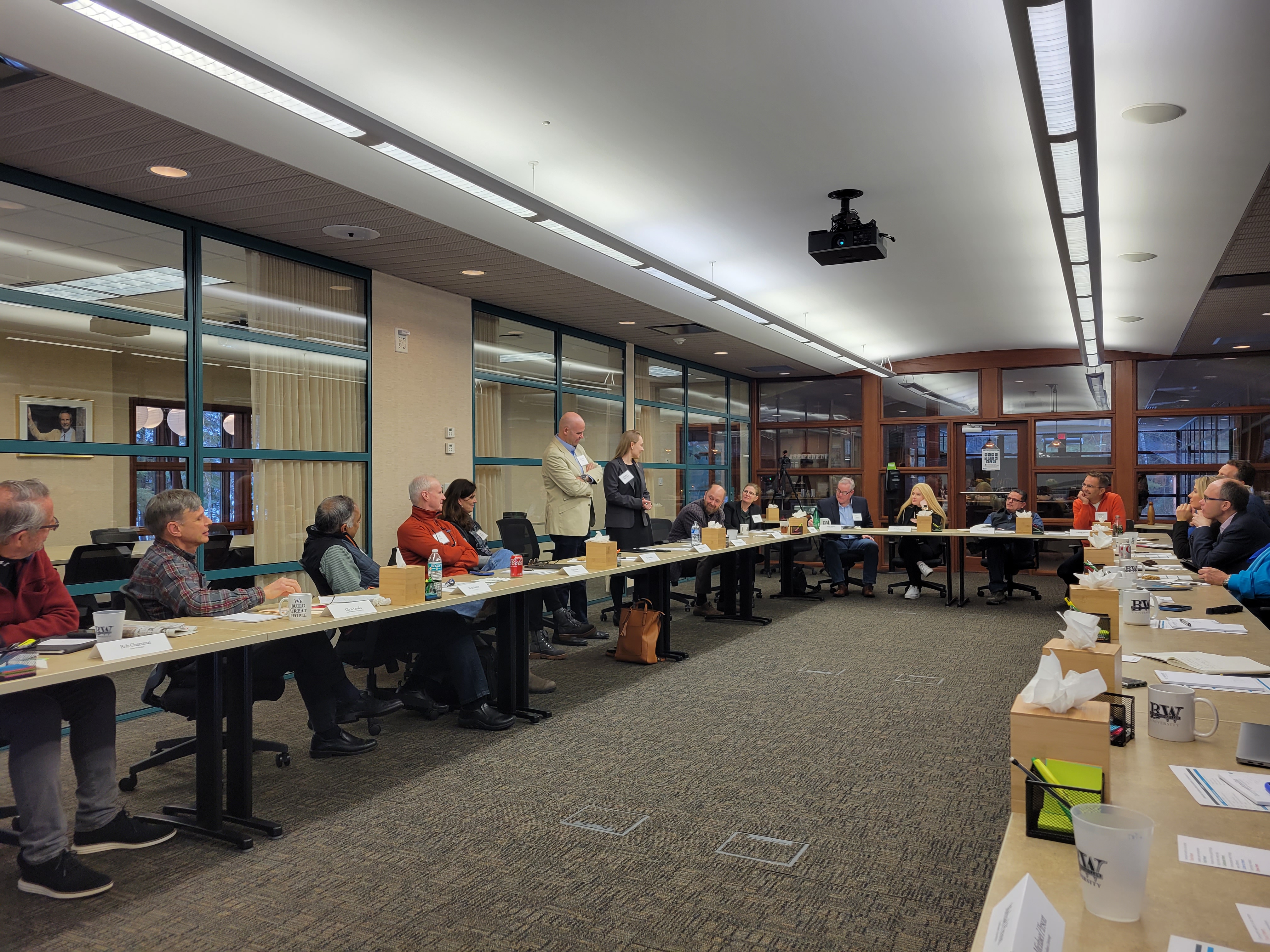
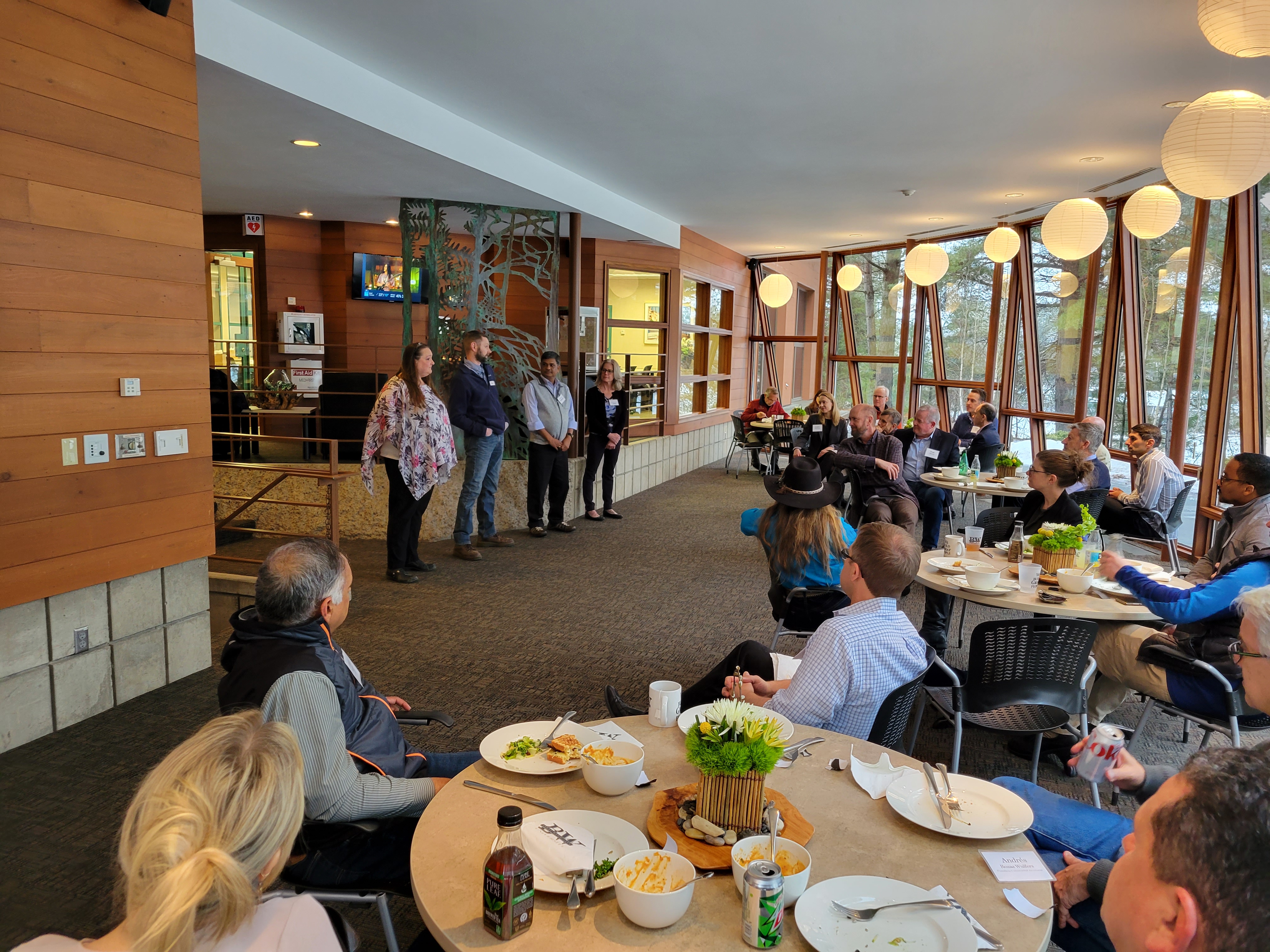
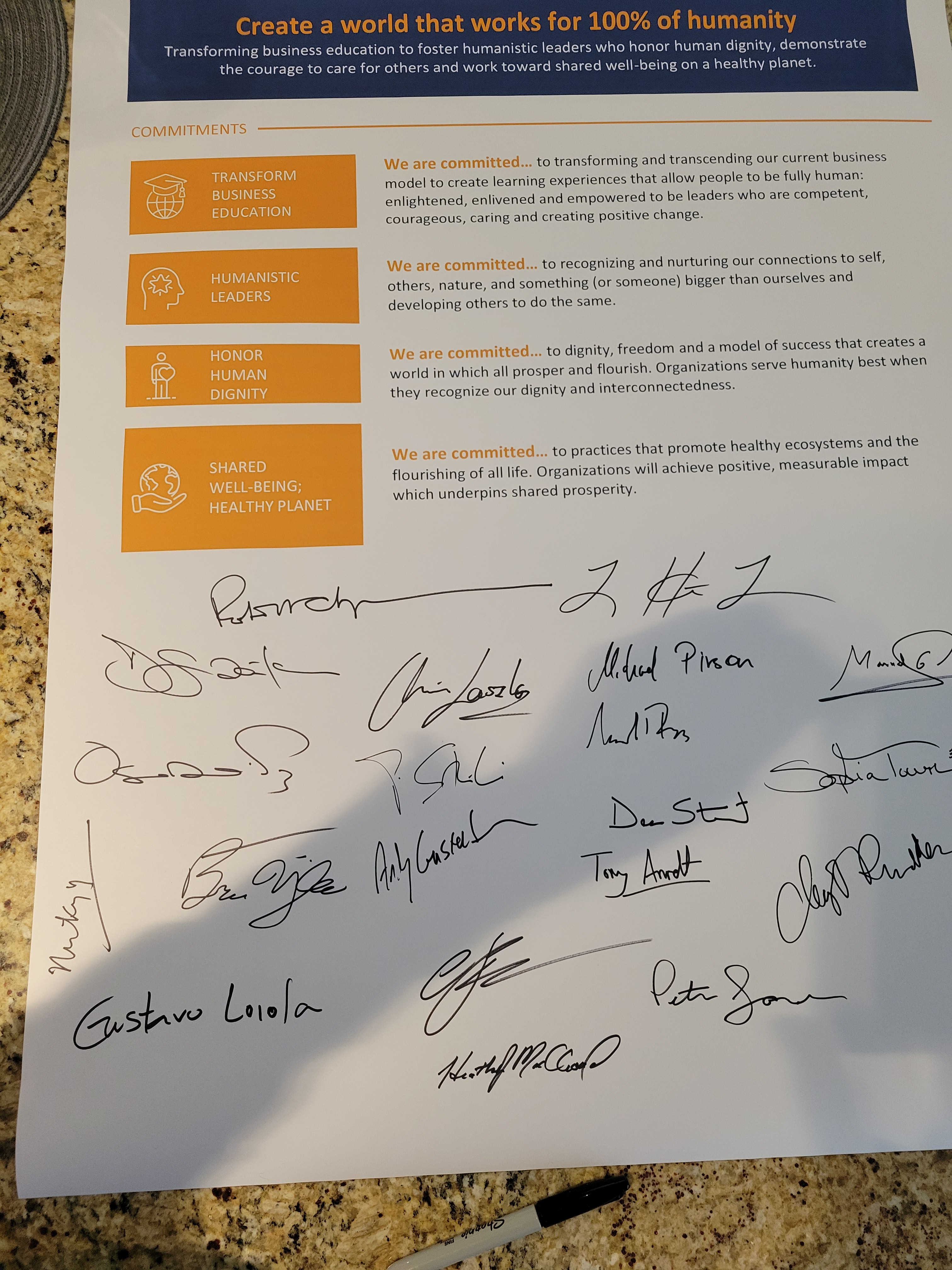
BFCGI director Andy Gustafson was fortunate to participate in a humanistic management brainstorming session hosted by Bob Chapman, of Barry-Wehmiller in Phillips Wisconsin March 30-April 1. Around 20 academics from across the US as well as Spain, Mexico and Columbia participated, as they worked to hammer out a Humanistic Management manifesto, to encourage other like minded teachers to help students capture the vision to manage for the betterment of their employees, not merely to make more money.
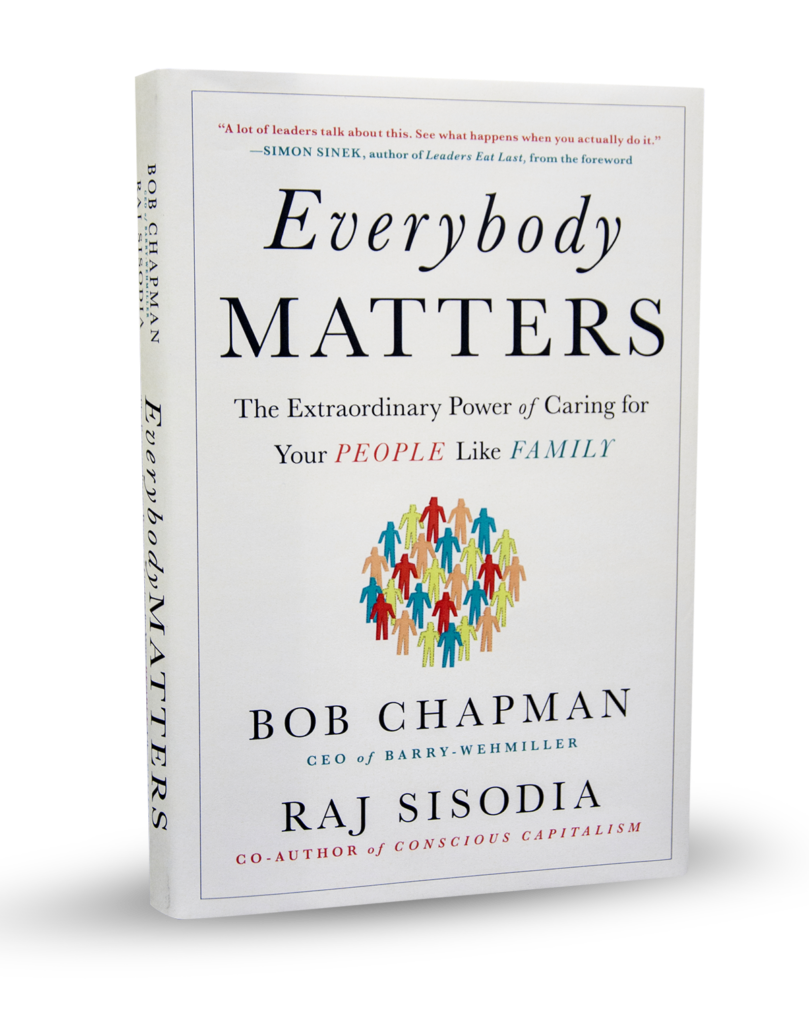
Bob Chapman is a remarkable manager, having taken the reigns of his fathers company suddenly at a fairly young age, and having grown the company by acquisitions into a 1.7 Billion dollar company today. More importantly, Bob has found that focusing on his employees is the most important thing, and he takes his responsibility as steward for them very seriously. His vision is infectious, and his commitment is unshakable. His journey and method is laid out clearly in his book, “Everybody Matters: The Extraordinary Power of Caring for Your People Like Family“.
Chapman provides many practical insights from his own experience turning around companies throughout his career. He has come to be absolutely convinced that “Everything we value in life and business begins and ends with people” and he has put the flourishing and well being of his people as top priority. Profit is the fuel for business, but the aim and end is to help people reach their full potential, and as an employer, Bob Chapman takes that stewardship responsibility very seriously.
Lead colleague/Director of the Business Faith and Common Good Institute, Andy Gustafson, has been appointed as executive director of the Society of Business ethics for the 2022-2027 term, starting in August of 2022. Upon appointment he wrote, “I am thankful for the opportunity to serve the Society of Business Ethics, and I am so very grateful to those original founders who have come before us to build up such an outstanding international organization. I am excited for the chance to serve all of you members, and I hope for very good things to come!” The society of business ethics is an international society which has been in existence since 1980 to promote the study and impact of ethics in business.
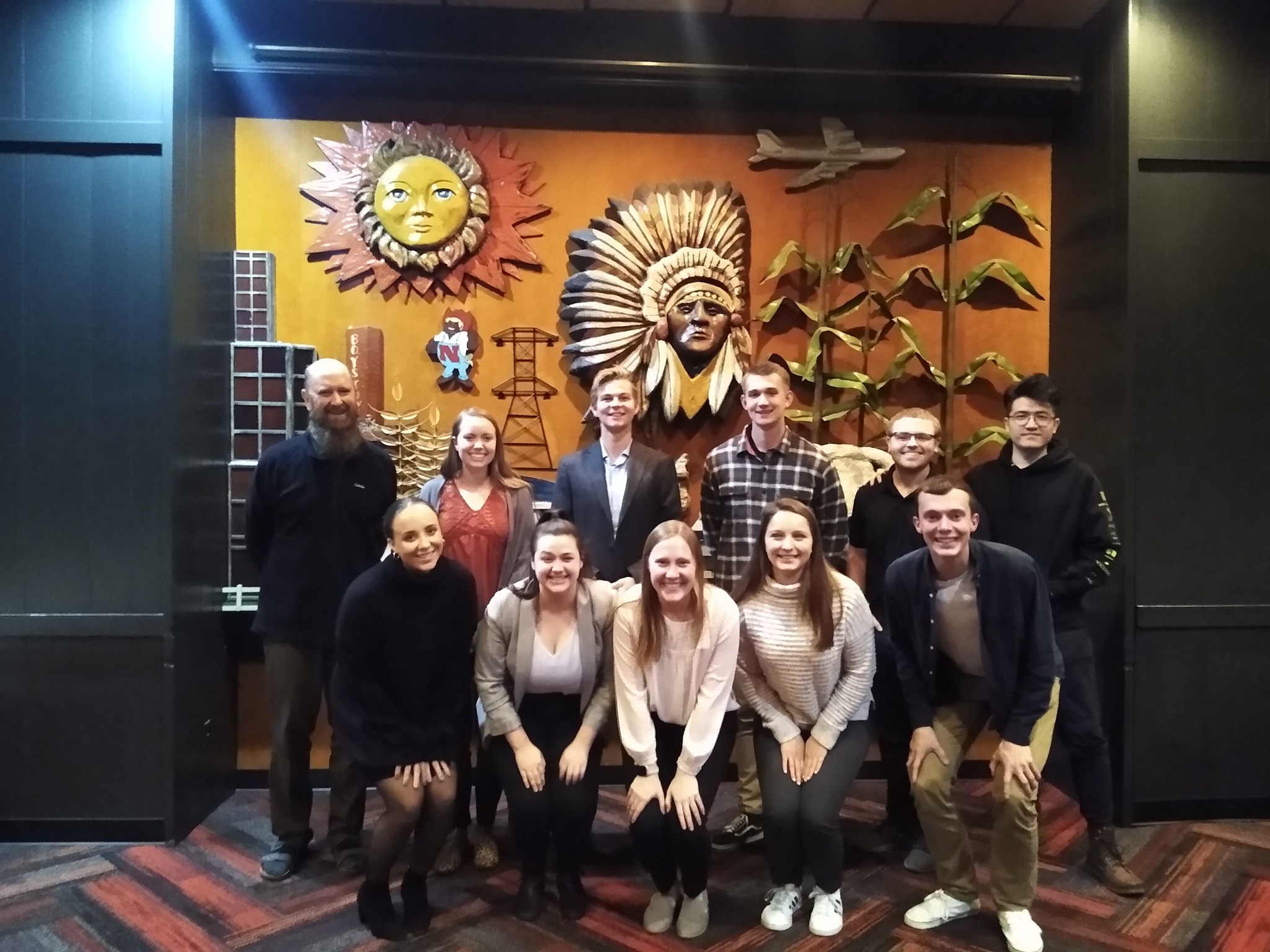
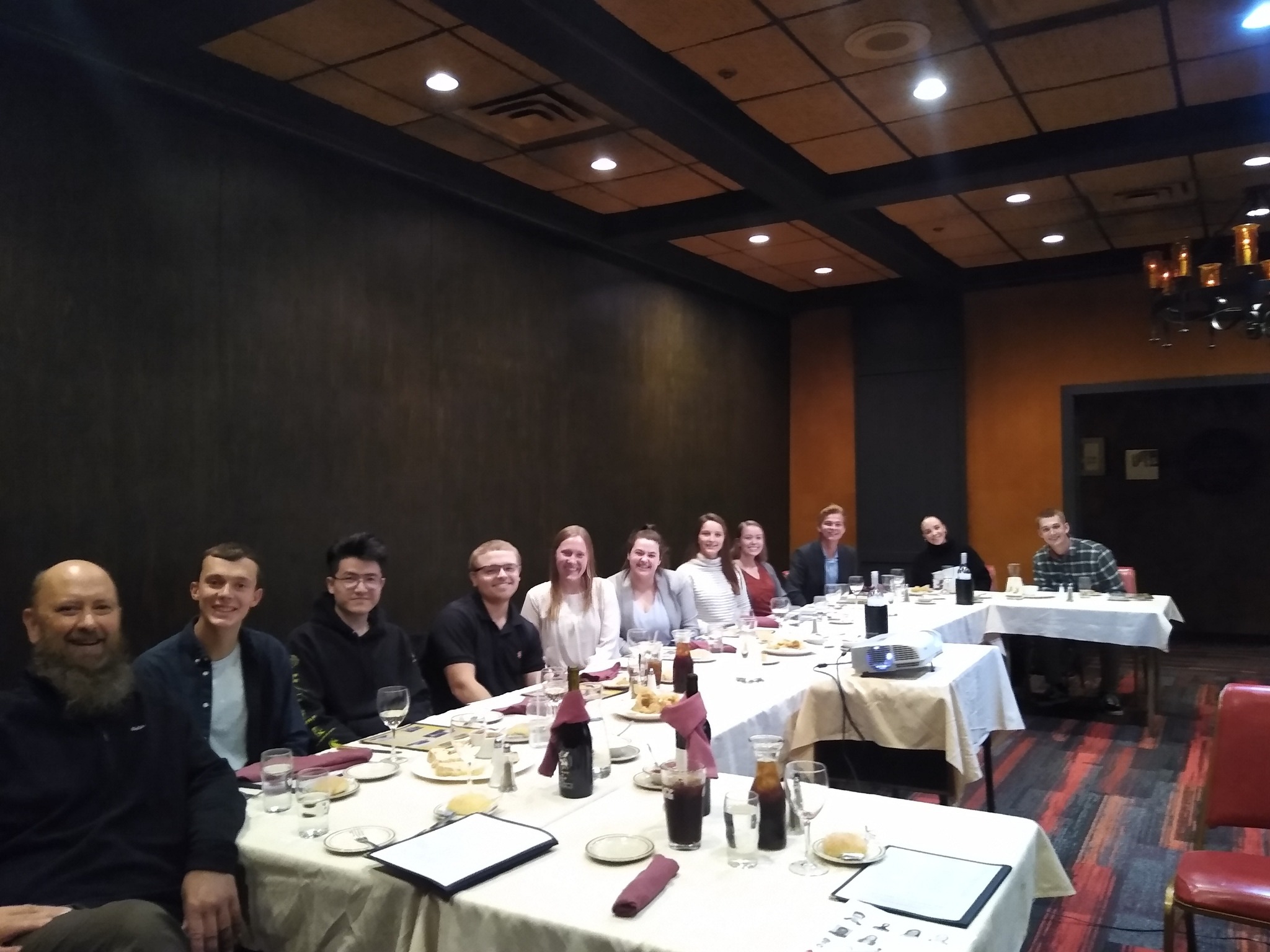
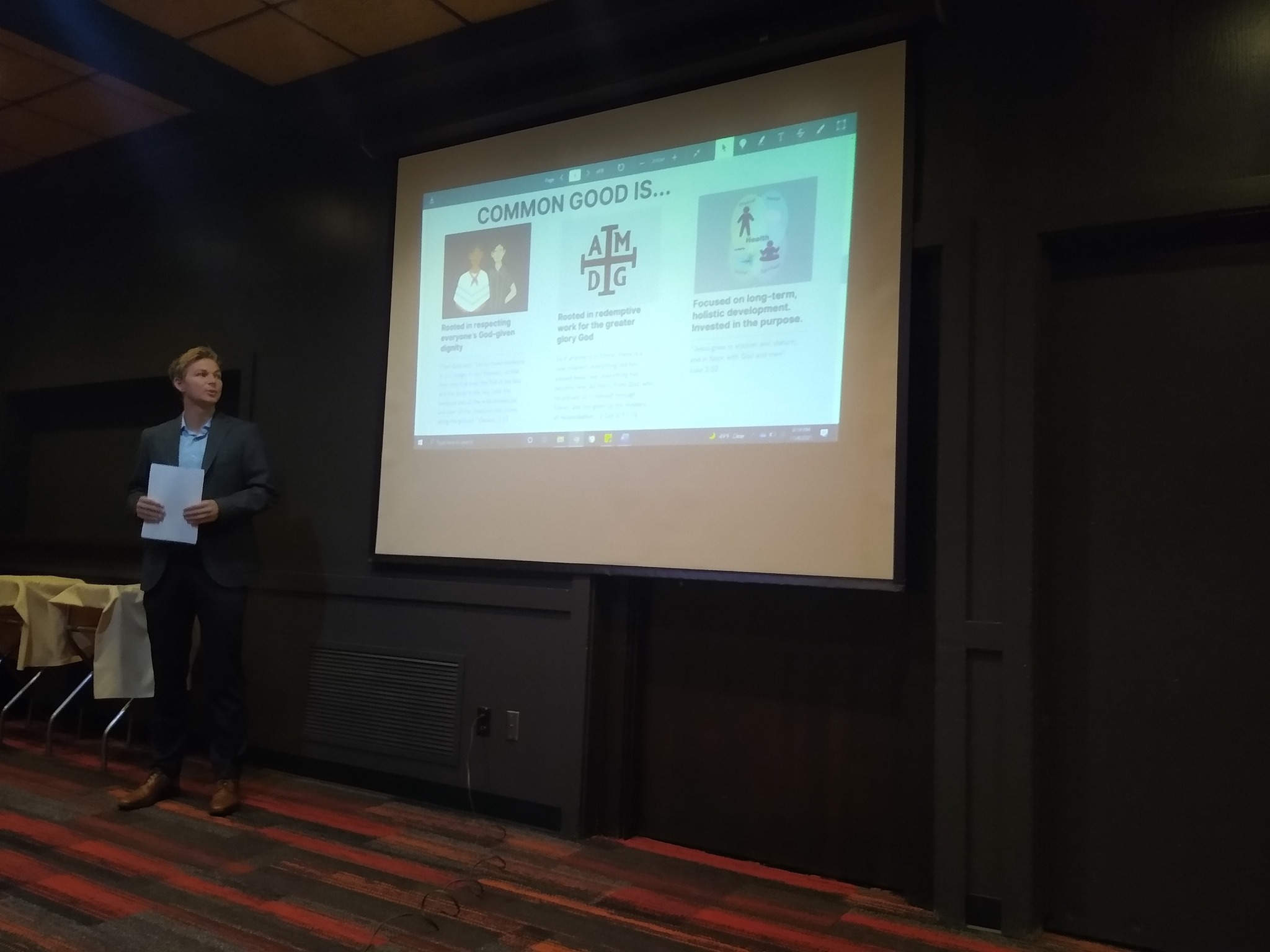
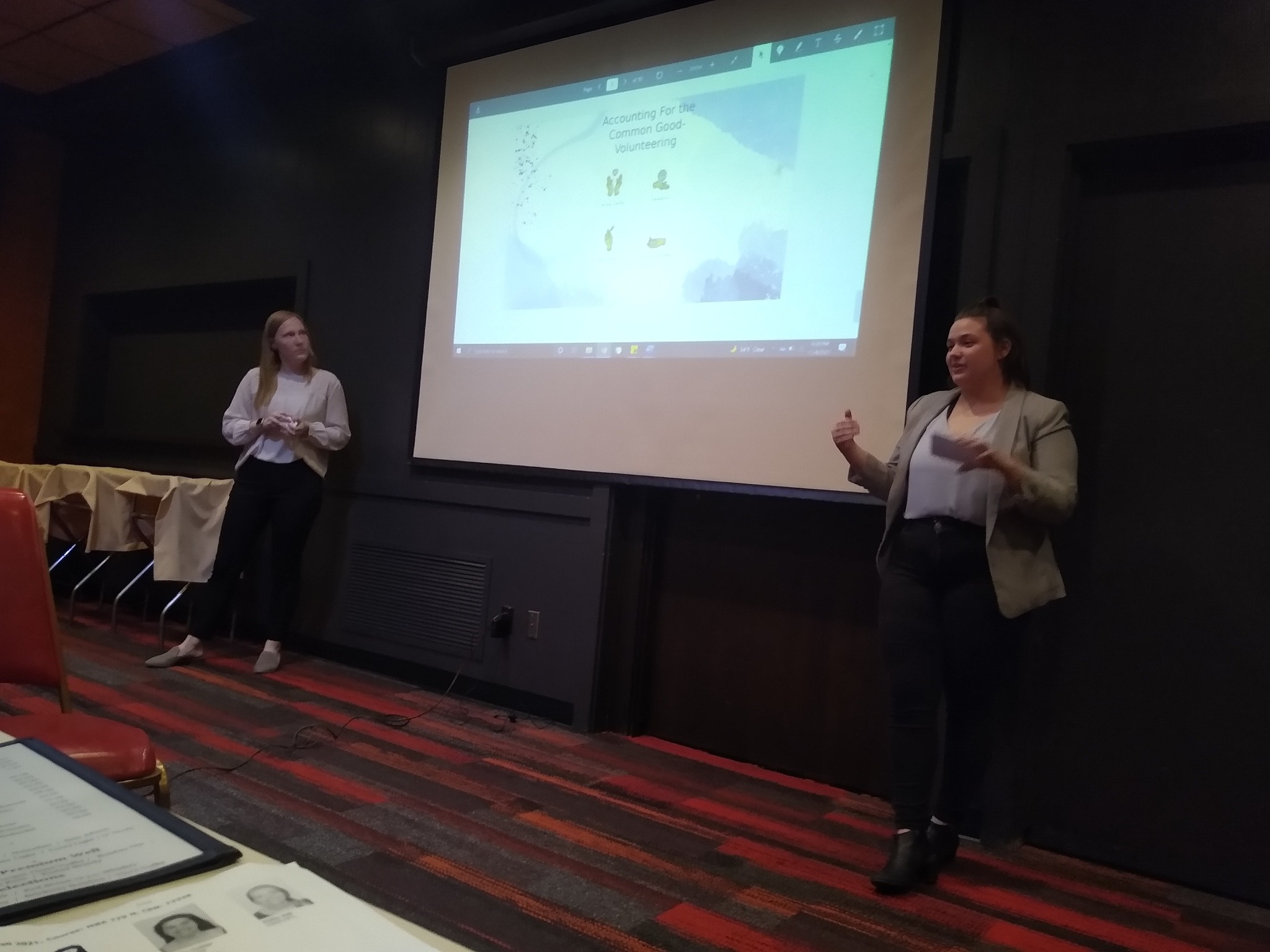
This year we had a wide variety of presentations, ranging from the “Boxing and the Common Good” and Islamic perspectives on Business and Society, to how Accounting or Financial Services might benefit from thinking about faith and Catholic Social Thought
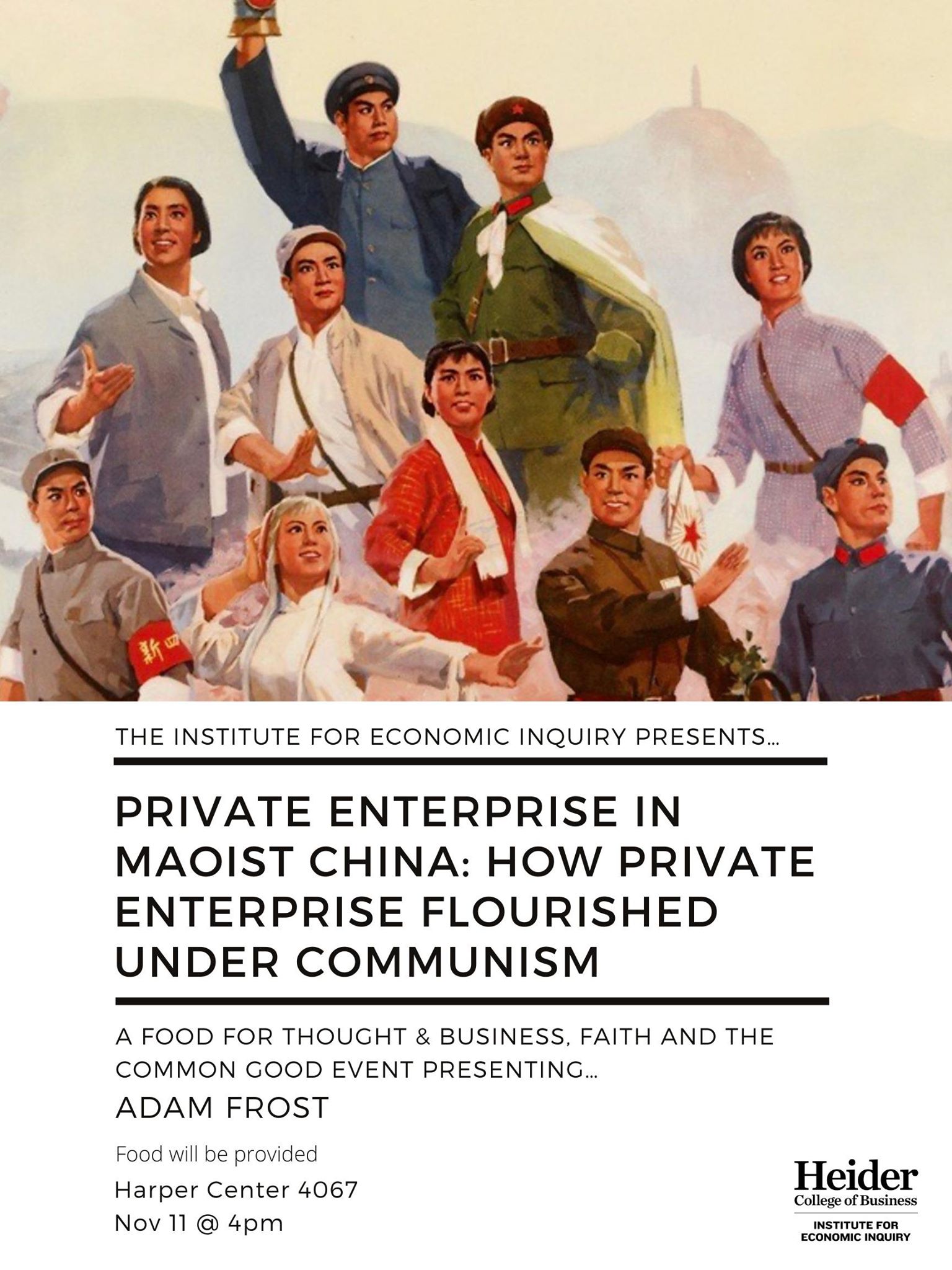
Adam Frost has done extensive research into the history of illicit entrepreneurship in socialist China, particularly in the Maoist era. Beginning in the 1950’s, with the enactment of systems of rationing and distribution, there emerged in China vast illicit networks operating in circumvention of the planned economy. Within these networks, a broad class of specialists, ranging from petty traders of ration coupons to large-scale arbitragers, sought opportunities to profit from inefficiencies in central planning. Referred to by communist officials as “speculators and profiteers,” these individuals were branded the economic enemies of socialism and became the targets of recurring anti-capitalist campaigns. Yet, as this research will show, these “speculators” were actually the PRC’s first generation of entrepreneurs who not only facilitated the functioning of the socialist economy but also helped pave the way for China’s marketizing reforms.
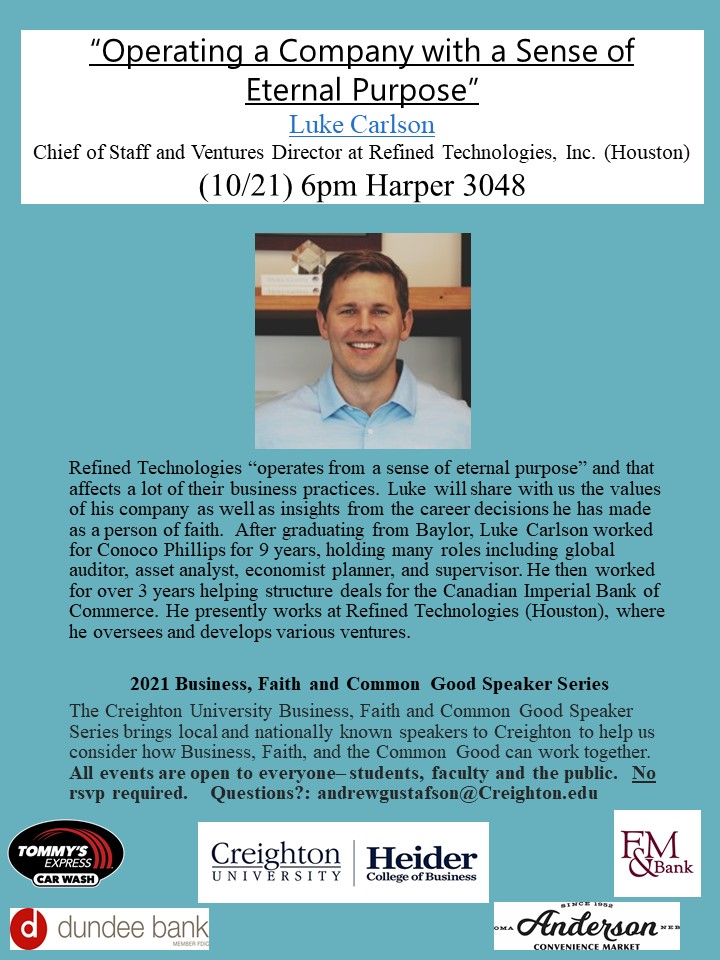
After graduating from Baylor, Luke Carlson worked for Conoco Phillips for 9 years, holding many roles including global auditor, asset analyst, economist planner, and supervisor. He then worked for over 3 years helping structure deals for the Canadian Imperial Bank of Commerce. He presently works at Refined Technologies, where he oversees and develops various ventures. He shared what it means to run a business with expectations to create overflow and benefit for others.









 Business, Faith, and the Common Good Institute