BFCGI 2022 Symposium: Helping Those at the Margins Through Business

Holiday season can add financial anxiety | News | norfolkdailynews.com
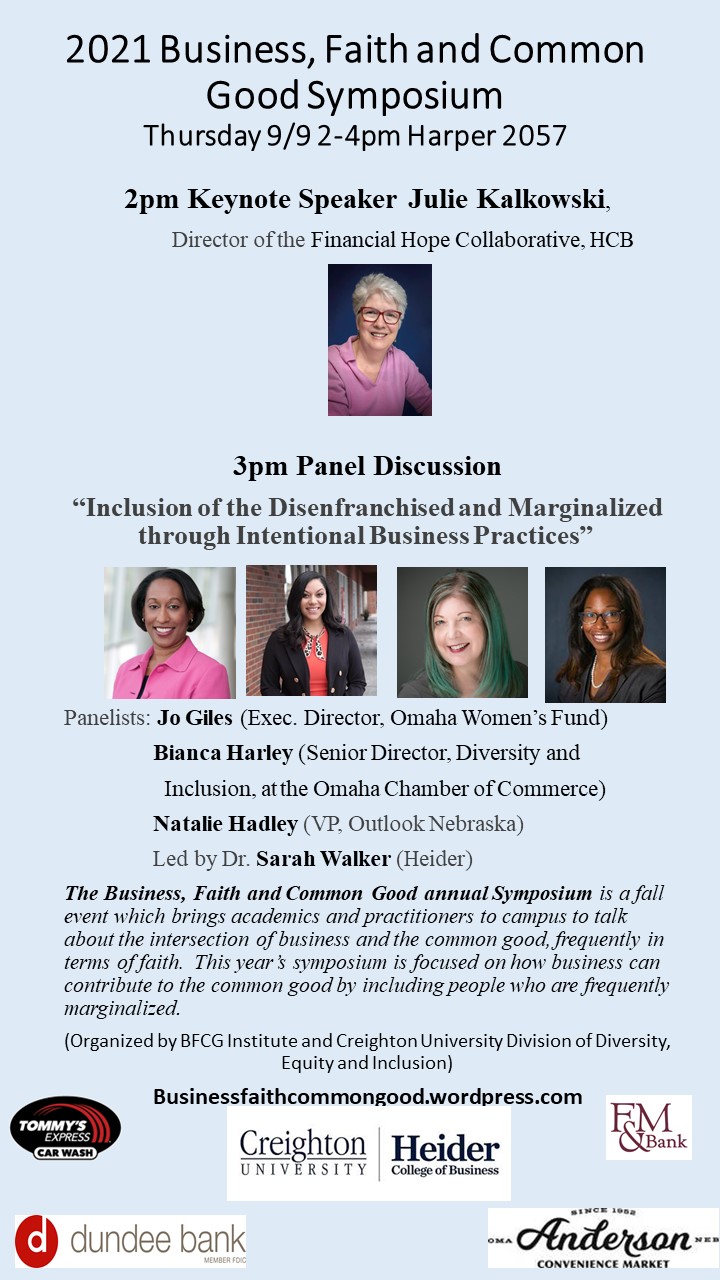
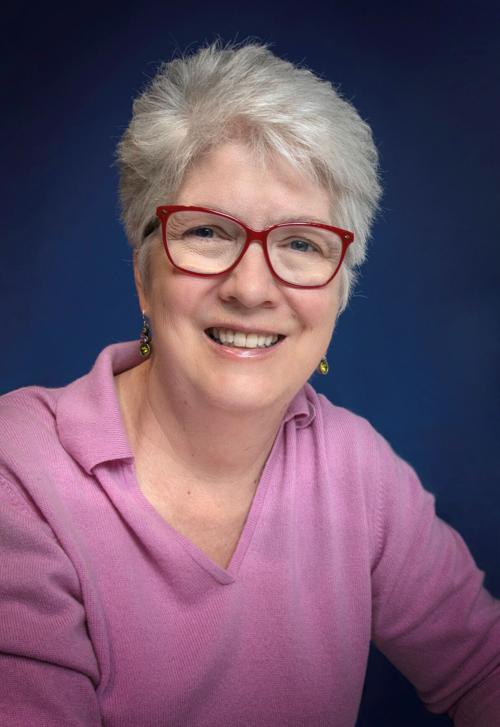
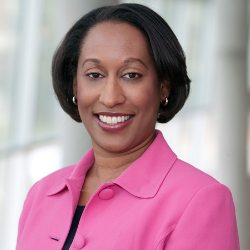
This year the keynote speaker for the BFCGI Symposium was Julie Kalkowski, Director of the Financial Hope Collaborative. A consumer advocate, Julie Kalkowski has worked directly with at-risk members of Omaha metropolitan area to find financial stability, helping them better manage their finances and avoid falling into cyclical debt.  The Financial Hope Collaborative and its Financial Success Program, housed at Creighton University’s Heider College of Business have been instrumental in helping many low-income families find financial stability.  She was a member of the Federal Financial Protection Bureau Advisory Board before it was disbanded. 
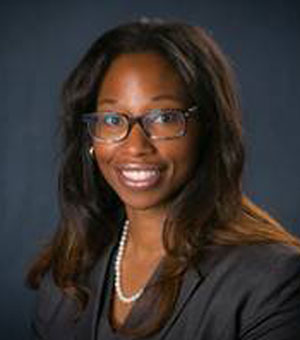
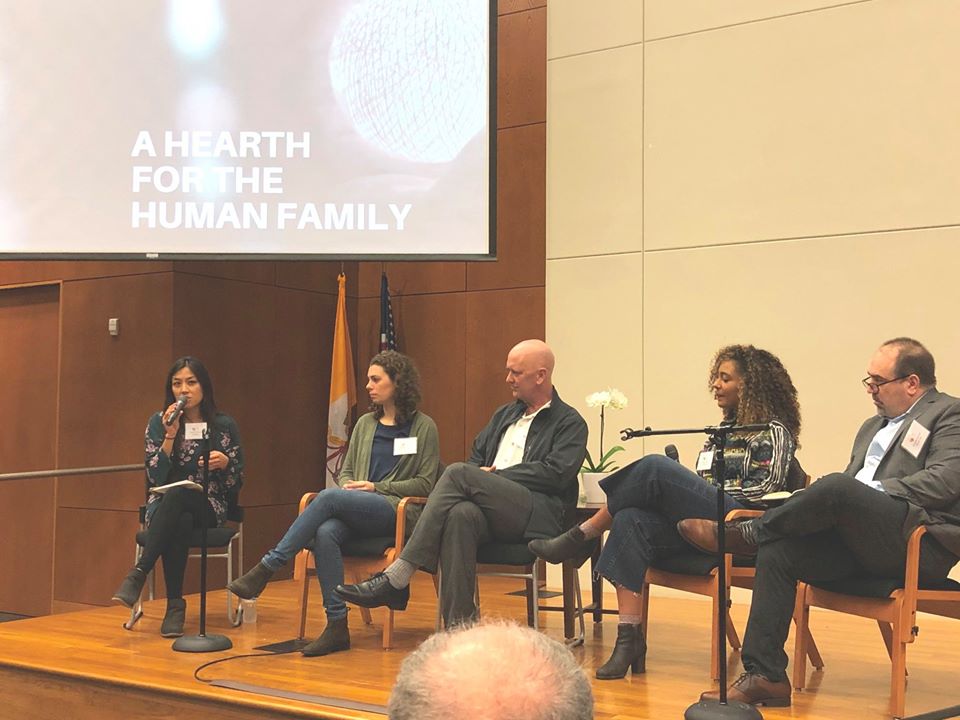
The symposium also included a Panel Discussion: “Inclusion of the Disenfranchised and Marginalized through Intentional Business Practices” Which focused on the question of how can business itself help make life better for everyone, and help include those who are frequently marginalized?  Panelists were Jo Giles (Exec. Director, Omaha Women’s Fund), who spoke about the importance of supporting women in the corporate business world, and Natalie Hadley (VP, Outlook Nebraska), whose organization employs the blind at their factory, and the discussion was led by Dr. Sarah Walker, Associate Professor and VP for Diversity, Equity and Inclusion at Creighton University

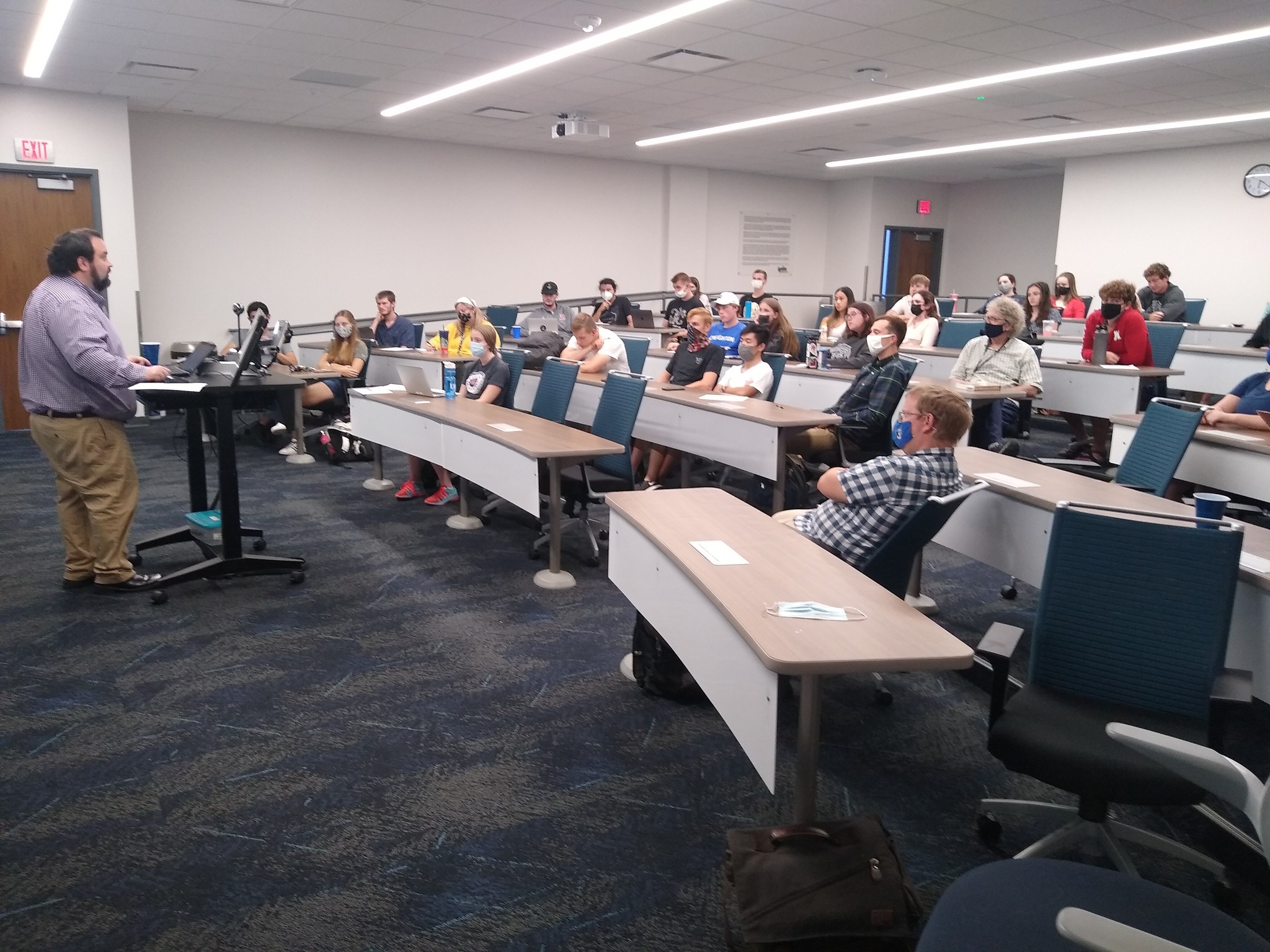
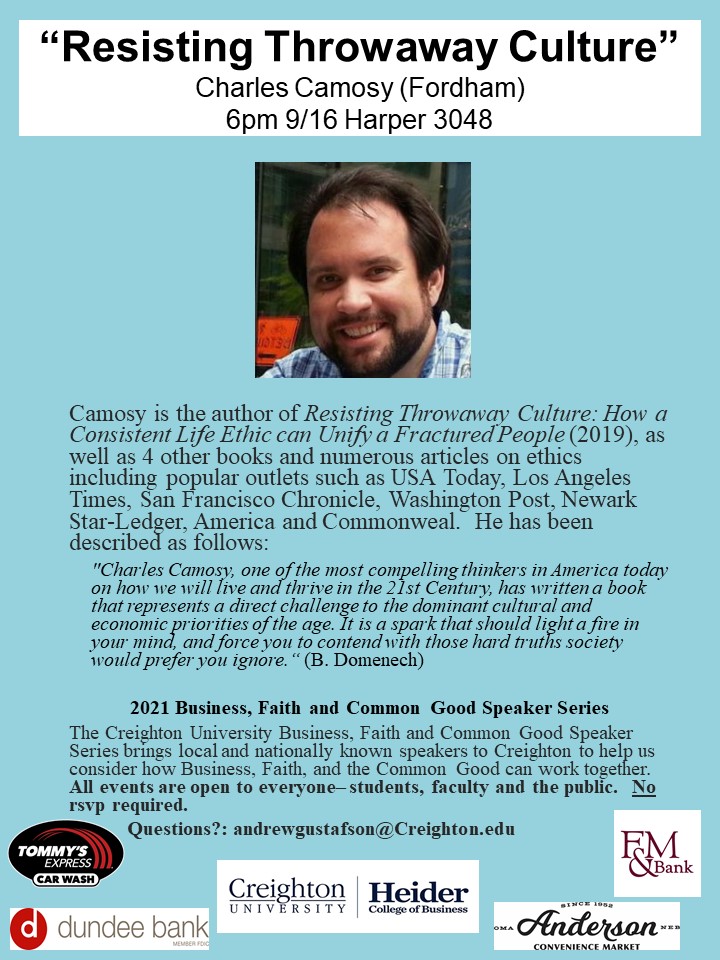
BFCGI welcome’s Charles Camosy (Fordham) for a talk on his book Throwaway Culture Thursday September 16th

Our BFCGI speaker Thursday September 16 will be Charles Comosy (Fordham University) author of Resisting Throwaway Culture: How a Consistent Life Ethic Can Unite a Fractured People, a book in which he articulates a new moral vision in which a culture of encounter and hospitality replaces a consumer culture in which the most vulnerable get used and discarded as so much trash. His talk will take place at 6pm in the Union Pacific Room at the Harper Center (room 2057/58). All students, faculty and the general public are welcome to attend.

Dr. Camosy is a frequent expert guest on various TV programs, and has published articles in the USA Today, New York TimesWashington PostLos Angeles TimesNew York Daily News, Commonweal, and America magazine, American Journal of BioethicsJournal of Medicine and PhilosophyJournal of the Catholic Health Association. He is the author of five books. Too Expensive to Treat? (Eerdmans) was a 2011 award-winner with the Catholic Media Association, Peter Singer and Christian Ethics (Cambridge) was named a 2012 “best book” with ABC Religion and Ethics, and For Love of Animals (Franciscan) was featured in the New York Times. Beyond the Abortion Wars (Eerdmans), was a 2015 award-winner also with the Catholic Media Association. His most recent book, Resisting Throwaway Culture (New City), was published in May of 2019 and won first place from the Catholic Publishers Association as “Resource of the Year.” In addition to advising the Faith Outreach office of the Humane Society of the United States and the pro-life commission of the Archdiocese of New York, Camosy received the Robert Bryne award from the Fordham Respect Life Club and received the 2018 St. Jerome Award for scholarly excellence from the Catholic Library Association. He has four children, three of whom he and his wife Paulyn adopted from a Filipino orphanage in June of 2016.

Institute Colleagues Gustafson and Harvey Present at two conferences– the Vincentian Business Ethics Conference in Dublin (10/19) and the Annual Economy of Communion Conference (1/20)

eoc san antonio

Institute colleagues Andy Gustafson and Celeste Harvey presented at two conferences recently.  First, they gave papers at the Vincentian Business Ethics Conference in Dublin in October 2019.  Harvey’s paper was on the characteristics of the Economy of Communion which distinguish it from the stakeholder and stockholder appraoches to business.  Gustafson’s was on the similarities and differences between Catholic Social Thought and British Utilitarianism.

January 2020 they again presented at the Annual Economy of Communion conference.  They were both on a panel regarding recent research on EOC and then Gustafson was also on a panel of EOC entrepreneurs sharing stories from what their vision of business is.  Gustafson’s brief remarks can be seen in the following clips:


Gambling vs Investing: Is There a Difference?

IMG_20191031_180353208

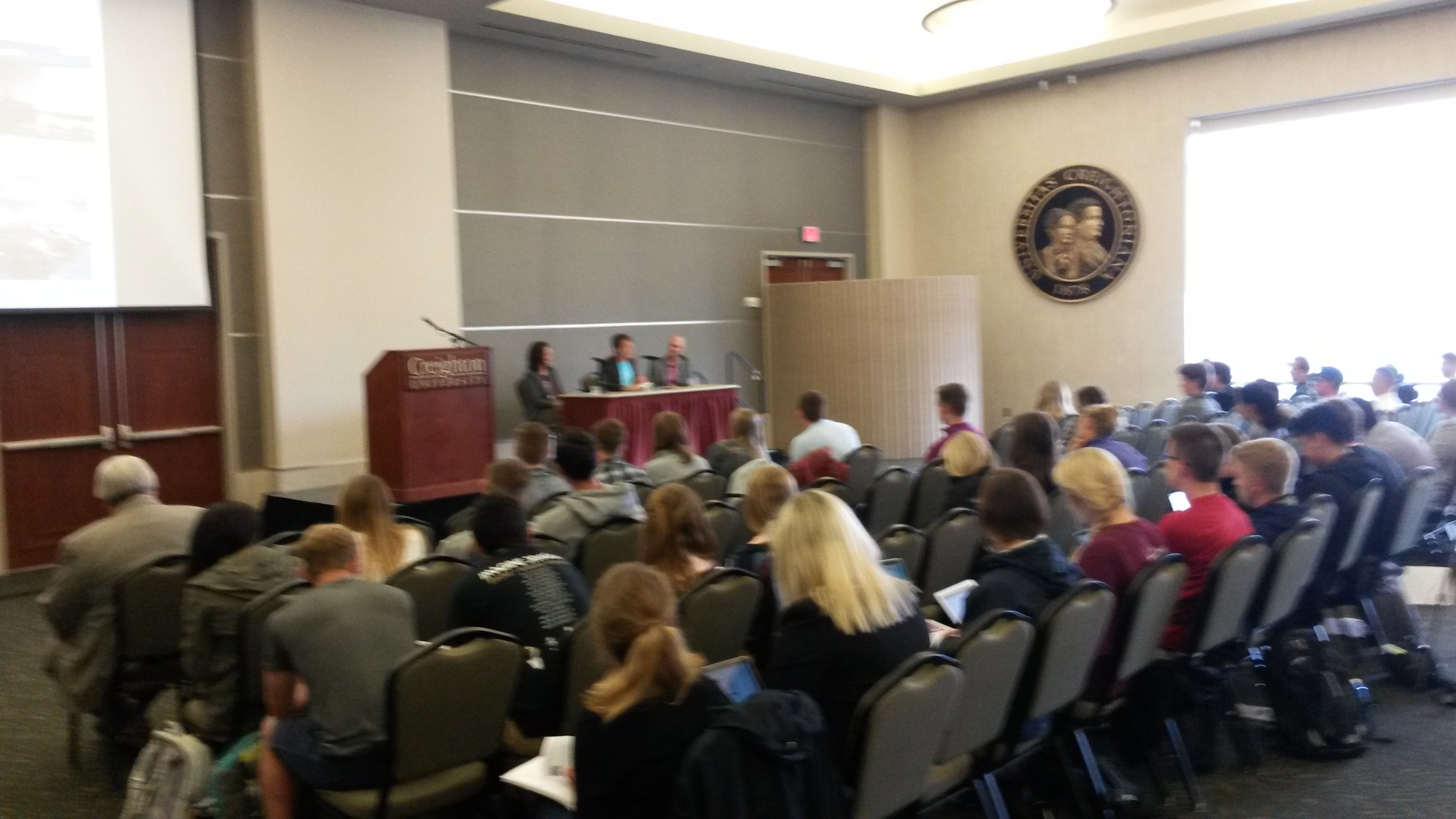
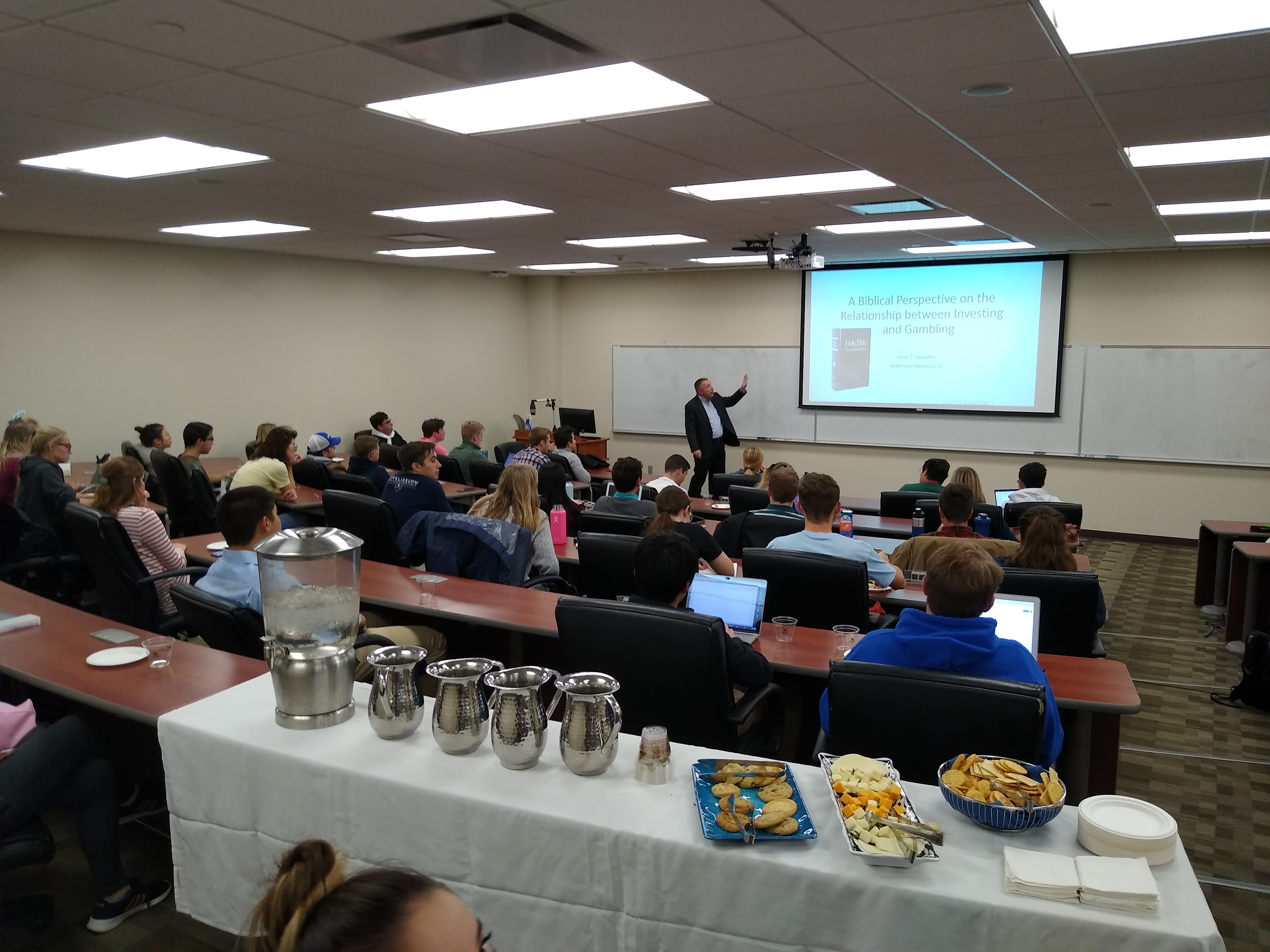
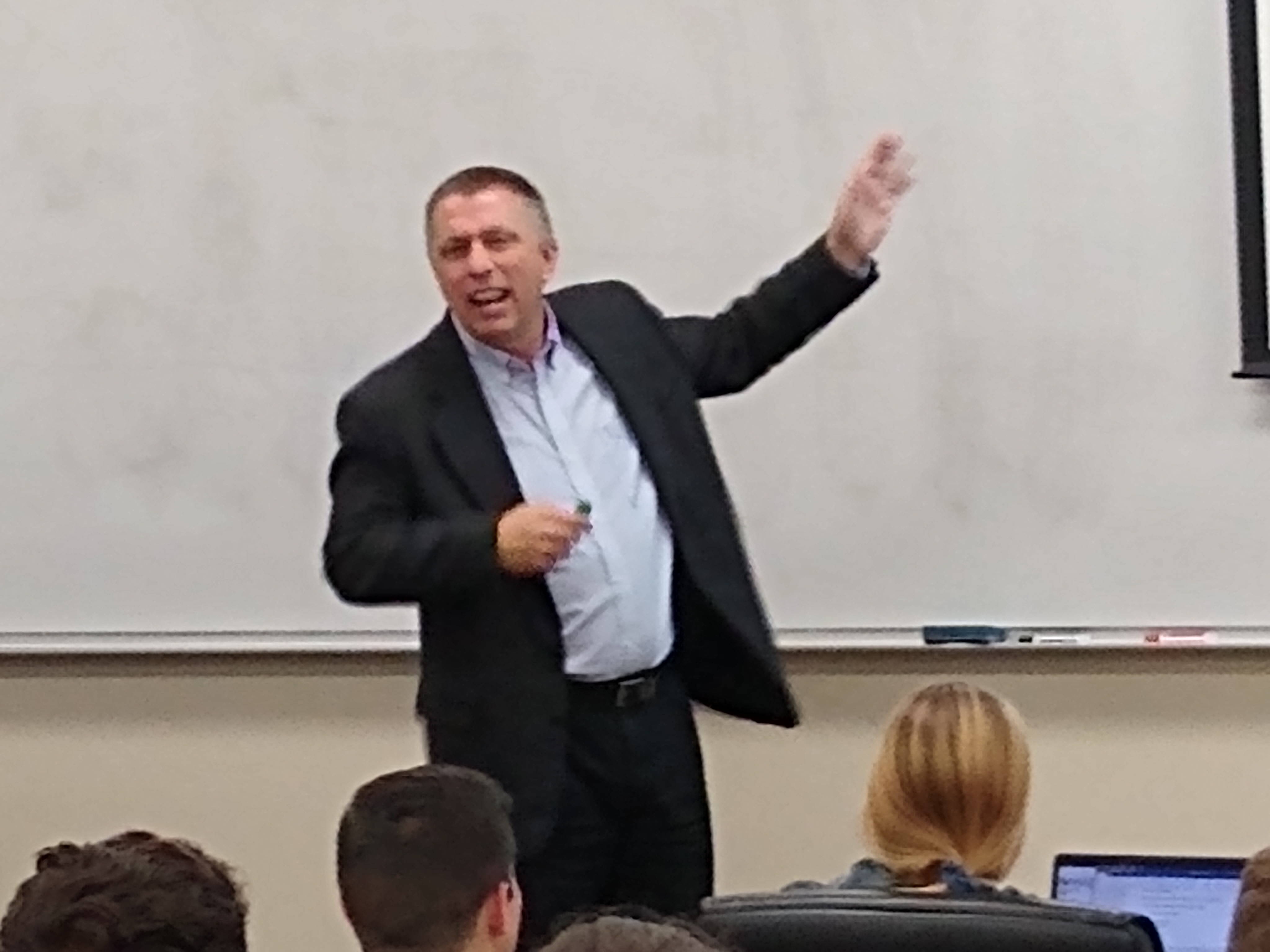
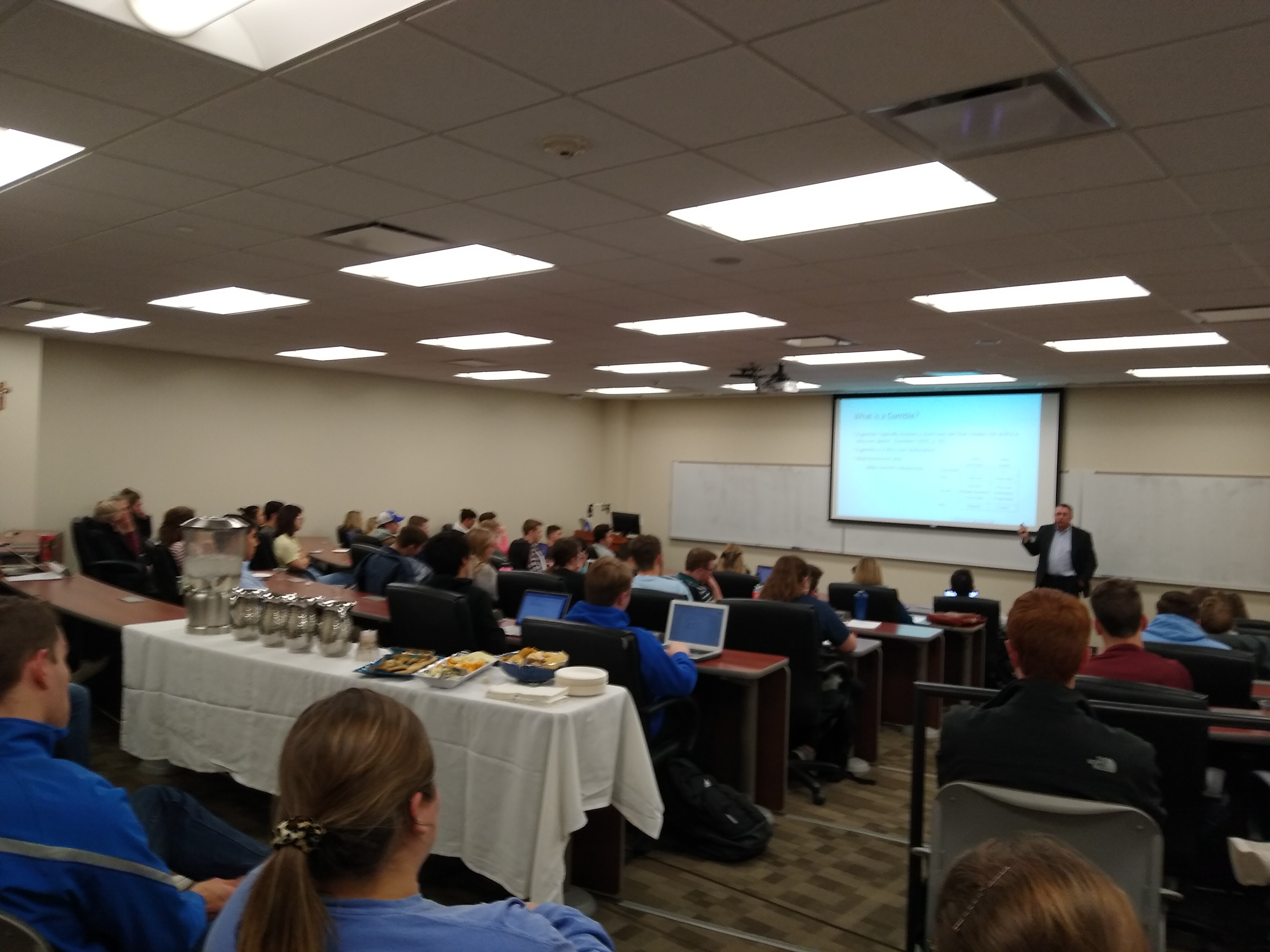
The Business, Faith and Common Good Institute brought Kent Saunders to campus Halloween night to give a talk on the differences and similarities between gambling and investing.  He spoke to a full room of students.  Saunders, who teaches finance at Anderson University in South Carolina, has published on the relationship between gambling and investing from a biblical perspective, and that was the topic of his talk.

Saunders emphasized that typically investing is characterized by being a long-term strategy which risks money hopefully for the sake of win-win outcomes– where the investor makes a profit, and other people are also benefited (happy customers, etc).  Investment typically leads to overall growth– a general increase in wealth overall.  Gambling, on the other hand, is typically short term, has little societal benefit, and is typcially a zero-sum game, where one person wins at anothers loss.  No general increase is provided.
IMG_20191031_181945980

Bringing in the Biblical perspective was interesting.  Saunders brought up examples of investing, such as the parable of the talents, where the servant who invests wisely and increases his wealth is praised, while the servant who hides the money so he loses none is scolded (or worse).  He also brought up examples of gambling or potential gambling in the Bible, particularly the casting of lots which he pointed out does not seem to be gambling in the normal sense of that word.

Ultimately, Professor Saunders cautioned that more and more activities which are considered to be investing are in reality gambling,  because they are not long-term focused, they do not have societal benefit, they are zero-sum with a winner and a loser, rather than increasing economic growth overall.  Day-trading was one example he brought up.  Ticket scalping or other sorts of hoarding transactions might be other types.

Overall it was a stimulating talk and there were a lot of questions and insights from students afterwards.  We were very happy Professor Saunders made his first trip to Omaha to visit Creighton.
IMG_20191031_181538297

Responsibility for Effects of Our Actions

larry excited  larry distant

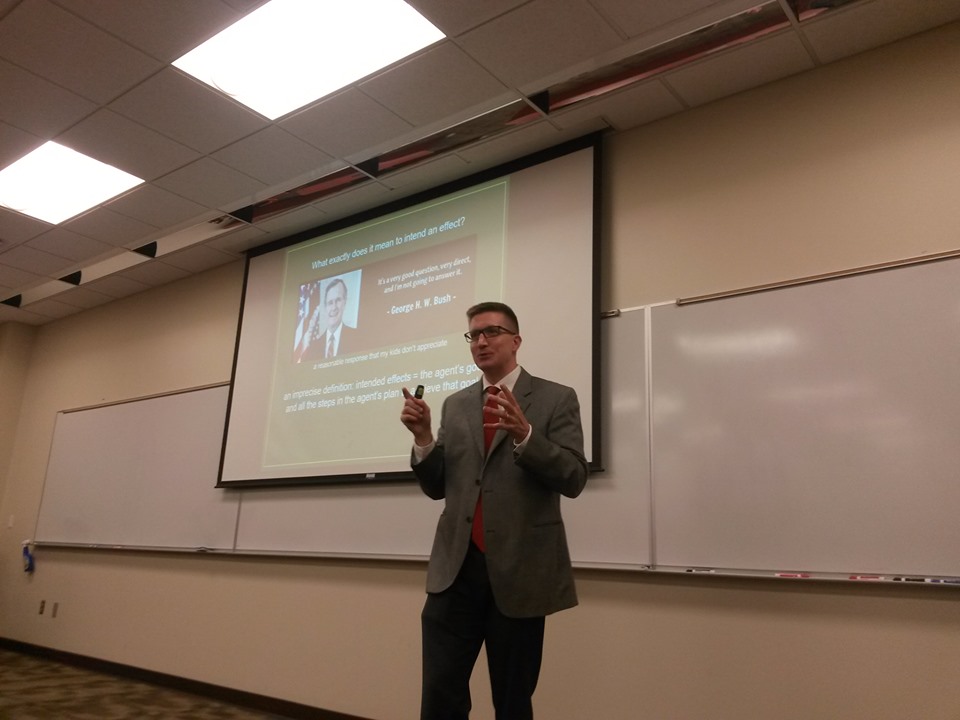
On October 10th Creighton brought Larry Masek, professor at Ohio Dominican University (Ohio) to campus to speak to our students and community about how we are or are not responsible for the distant effects of our actions.  Dr. Masek has published a book recently on the doctrine of double effect, a principle of Catholic moral teaching which tries to tease out what exactly we are culpable for in such situations.

One memorable example Dr. Masek brought up was an example of Eisenhauer sending troops to Normandy.  Eisenhauer did not want many troops to die that day, but he knew that they would.  But his intent was to win the battle, not to lose troops.  Of course it would be a very different thing if Eisenhauer actually wanted to try to have as many troops die as possible, and thought that sending them to Normandy would do that.  What we are trying to accomplish is typically what gives us the culpability. 

Of course this can have significant impact on the culpability of certain business behaviors as well.  I may be trying to get the best price I can for my clients.  In the meantime I may make my supplier suffer by losing money, but that is not my intent– my intent was to help my customer.  So obviously there are some serious reprecussions of the principle of double effect for business activities.

larry supper

Andy Gustafson

“Sin In Business”

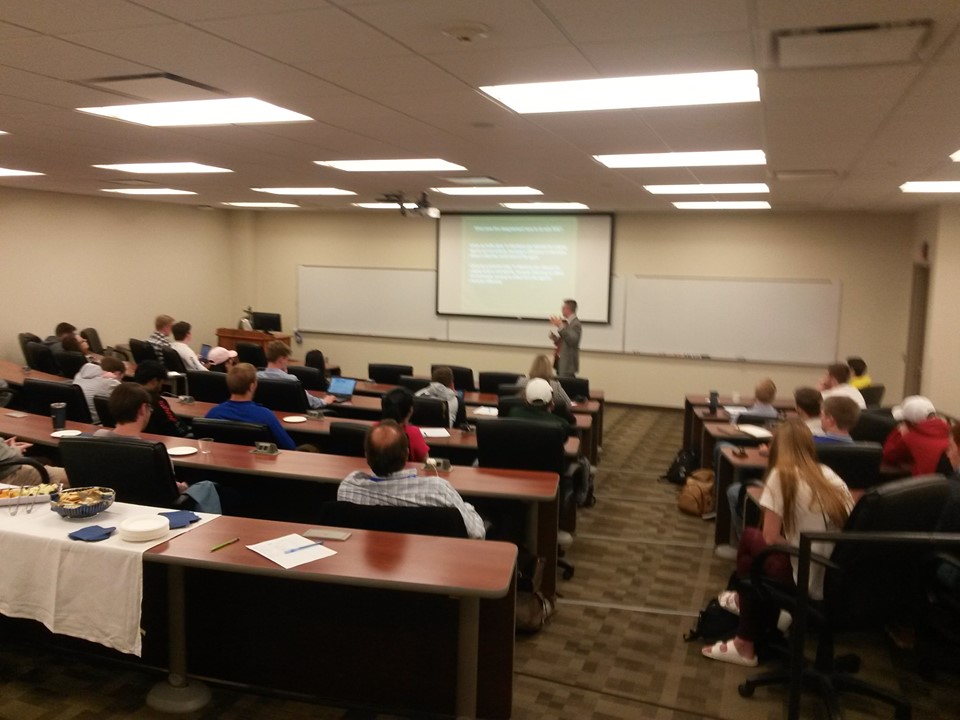
Jason Stansbury (Calvin U.) spoke to a packed room this Thursday (10/3) on the topic of “Sin in Business”  Stansbury, who is currently the executive director of the Society of Business Ethics (2017-2022) holds a Chair in business ethics and teaches business ethics at Calvin University in Grand Rapid Michigan.

20191003_182509 Jason Stansubury spoke to a packed room on Thursday night (10/3) on the topic of “Sin in Business”.  Stansbury, the executive director of the Society of Business Ethics (2017-2022) holds a chair in business ethics where he teaches at Calvin University.

Stansbury provided a wide variety of examples of how sin can affect our business practices.  A key point he brought up was that all sin is originally based on something good– sin is frequently a misuse or inappropriate use of something which is good.  Making money is good, but when your concern for that trumps all other concerns–your responsibilities to family, others, and basic honesty, it  is inordinate.  The sin we frequently see in business is when we inordinately love something– and love it more than God.

20191003_180834

Stansbury emphasized our responsibility, as well as the gradual effects of sin.  In a memorable example, he gave the example of drinking beer.  The first beer you drink has some influence on the second and third, but typically one is still free at that point, but if you get to your 8th beer, it is likely you have given up quite a bit of that original freedom,and the beer is making the decisions.  This is similar in business situations, where your first act of committing fraud may lead to a second, and soon you find yourself neck-deep and almost inextricably caught in a pattern of doing business from which it can seem there is no escape.   This shows us that it is very important to be concerned with the first decisions one makes– for that decision can lead to a gradual erosion of free will.

Stansbury also highlighted structural sin, and spoke of the important effects of a company’s culture and its expecations on the behavior of its employees.  A company which has habits of sin– whether they be dishonesty, fraud, sexual harassment, inordinate focus on profit over all other humane concerns, etc– will habituate its employees into those sins as well.

After the public talk, Stansbury met with our Business Faith and Common Good seminar group.  AMong other things, he shared how that, as a young bright ambitious employee working for a firm in the Detroit area, he found himself becoming a person he did not want to be through the culture in which he was working.  ANd when he would raise ethical concerns about things he saw, he was frequently told that such decisions were above his pay grade and he needed to ‘stand down’.  So at 25 he made the choice to go get a Ph.D. in organizational behavior, and subsequently went to Calvin.  His passion for living authentic lives with integrity was evident to the students, and Creighton was blessed to have him on our campus.

20191003_230328

On Socialism and Consumerism

By Andy Gustafson
download john-paul-ii-rinkus-cns-photo-240 shop
For our Business, Faith, and Common Good class this week we read parts of Centesimus Annus (100 years) written in 1991 by Pope John Paul II to mark the 100th anniversary of POpe Pius XIII’s Rerum Novarum (1891).  Pope John Paul II, having seen the fall of Communist Soviet Union, was quite clear about the problems of materialistic socialism (communism).  Here are a couple things he says (my comments in blue)
First, socialism (which Pope JP II equates with the marxism he experienced) has a false view of the human being as a purely materialistic mechanical being without dignity or freedom, and subject to the system.  Here is Pope John Paul II:

13. Continuing our reflections, and referring also to what has been said in the Encyclicals Laborem exercens and Sollicitudo rei socialis, we have to add that the fundamental error of socialism is anthropological in natureSocialism considers the individual person simply as an element, a molecule within the social organism, so that the good of the individual is completely subordinated to the functioning of the socio-economic mechanism. Socialism likewise maintains that the good of the individual can be realized without reference to his free choice, to the unique and exclusive responsibility which he exercises in the face of good or evil. Man is thus reduced to a series of social relationships, and the concept of the person as the autonomous subject of moral decision disappears, the very subject whose decisions build the social order. From this mistaken conception of the person there arise both a distortion of law, which defines the sphere of the exercise of freedom, and an opposition to private property. A person who is deprived of something he can call “his own”, and of the possibility of earning a living through his own initiative, comes to depend on the social machine and on those who control it. This makes it much more difficult for him to recognize his dignity as a person, and hinders progress towards the building up of an authentic human community.

Today we see this everywhere– the notion that my identity is simply a social construct, or amalgamation of the society relationships and situation into which I have been placed.  This leads to viewing most human behavior as manipulatable, and so one finds business ethics articles, for example, where suggestions are made for example to use lemon-scented lysol in the workplace because it leads to 11% more ethical behavior…  Pope JP II Continues:


In contrast, from the Christian vision of the human person there necessarily follows a correct picture of society. According to Rerum novarum and the whole social doctrine of the Church, the social nature of man is not completely fulfilled in the State, but is realized in various intermediary groups, beginning with the family and including economic, social, political and cultural groups which stem from human nature itself and have their own autonomy, always with a view to the common good. This is what I have called the “subjectivity” of society which, together with the subjectivity of the individual, was cancelled out by “Real Socialism”.40

If we then inquire as to the source of this mistaken concept of the nature of the person and the “subjectivity” of society, we must reply that its first cause is atheism. It is by responding to the call of God contained in the being of things that man becomes aware of his transcendent dignity. Every individual must give this response, which constitutes the apex of his humanity, and no social mechanism or collective subject can substitute for it. The denial of God deprives the person of his foundation, and consequently leads to a reorganization of the social order without reference to the person’s dignity and responsibility.

Of course, we are talking about the logic of theories and ideologies here.  I am certain we know extraordinarily moral good wonderful people who are atheists, and plenty of mean morally challenged somewhat dispicable people who are theists.  🙂

The atheism of which we are speaking is also closely connected with the rationalism of the Enlightenment, which views human and social reality in a mechanistic way. Thus there is a denial of the supreme insight concerning man’s true greatness, his transcendence in respect to earthly realities, the contradiction in his heart between the desire for the fullness of what is good and his own inability to attain it and, above all, the need for salvation which results from this situation.

Pope John Paul II goes on to criticize Marxism and militarism for the same reasons: 

14. From the same atheistic source, socialism also derives its choice of the means of action condemned in Rerum novarum, namely, class struggle. ….

However, what is condemned in class struggle is the idea that conflict is not restrained by ethical or juridical considerations, or by respect for the dignity of others (and consequently of oneself); a reasonable compromise is thus excluded, and what is pursued is not the general good of society, but a partisan interest which replaces the common good and sets out to destroy whatever stands in its way. In a word, it is a question of transferring to the sphere of internal conflict between social groups the doctrine of “total war”, which the militarism and imperialism of that time brought to bear on international relations. As a result of this doctrine, the search for a proper balance between the interests of the various nations was replaced by attempts to impose the absolute domination of one’s own side through the destruction of the other side’s capacity to resist, using every possible means, not excluding the use of lies, terror tactics against citizens, and weapons of utter destruction (which precisely in those years were beginning to be designed). Therefore class struggle in the Marxist sense and militarism have the same root, namely, atheism and contempt for the human person, which place the principle of force above that of reason and law.

The Catholic Church has typically been against state control of the means of production, in large part because there is dignity in private ownership, and rights and responsibilities which come with owning wealth (an obligation to share excess with others for the common good), and this freedom and responsibility (which are at the root of human dignity) are not available under socialism (or communism):

15. Rerum novarum is opposed to State control of the means of production, which would reduce every citizen to being a “cog” in the State machine. It is no less forceful in criticizing a concept of the State which completely excludes the economic sector from the State’s range of interest and action. There is certainly a legitimate sphere of autonomy in economic life which the State should not enter. The State, however, has the task of determining the juridical framework within which economic affairs are to be conducted, and thus of safeguarding the prerequisites of a free economy, which presumes a certain equality between the parties, such that one party would not be so powerful as practically to reduce the other to subservience.43

In this regard, Rerum novarum points the way to just reforms which can restore dignity to work as the free activity of man. These reforms imply that society and the State will both assume responsibility, especially for protecting the worker from the nightmare of unemployment. Historically, this has happened in two converging ways: either through economic policies aimed at ensuring balanced growth and full employment, or through unemployment insurance and retraining programmes capable of ensuring a smooth transfer of workers from crisis sectors to those in expansion.

(Par 24) But the true cause of the new developments was the spiritual void brought about by atheism, which deprived the younger generations of a sense of direction and in many cases led them, in the irrepressible search for personal identity and for the meaning of life, to rediscover the religious roots of their national cultures, and to rediscover the person of Christ himself as the existentially adequate response to the desire in every human heart for goodness, truth and life. This search was supported by the witness of those who, in difficult circumstances and under persecution, remained faithful to God. Marxism had promised to uproot the need for God from the human heart, but the results have shown that it is not possible to succeed in this without throwing the heart into turmoil.
Pope Leo XIII wrote about the problems of socialism and importance of private property 128 years ago, and Pope John Paul II highlighted this especially in terms of the problems arising from trying to have an economic system based in atheism 28 years ago– namely, that there isn’t a proper conception of the dignity of human beings in a marxist materialist worldview.  No dignity, no freedom, no personal responsibility.
It is important to note, however, that Pope John Paul II points out that insofar as they both seem to view human beings in primarily materialist terms, marxism which expects salvation through political transformation and free market consumerism which expects salvation through free market consumption are both mistaken:

(from Par. 19) Another kind of response, practical in nature, is represented by the affluent society or the consumer society. It seeks to defeat Marxism on the level of pure materialism by showing how a free-market society can achieve a greater satisfaction of material human needs than Communism, while equally excluding spiritual values. In reality, while on the one hand it is true that this social model shows the failure of Marxism to contribute to a humane and better society, on the other hand, insofar as it denies an autonomous existence and value to morality, law, culture and religion, it agrees with Marxism, in the sense that it totally reduces man to the sphere of economics and the satisfaction of material needs.

Marxism and consumerism both fail to understand human beings properly, since both have reduced human beings to having only economic and material needs.  

Pope John Paul II is primarily reflecting here on Rerum Novarum, written in 1891 to criticize both socialism and rampant unregulated industrialization, both of which did not properly respect the dignity of human individuals.  It is remarkable how relevant much of these writings are relevant today, nearly 130 years later.  

Andy Gustafson

2019 Business, Faith and Common Good Symposium (Friday September 13th)– a Fine Conclusion to Creighton’s Mission Week (Sept 9-13)

cropped-20181005_153305.jpgThis year’s BFCGI Symposium will take place Friday September 13th from 2-5 in Harper 3023, with a reception to follow, as a final conclusion to Mission Week here at Creighton University.    Various entrepreneurs motivated by their faith will be speaking at the event.  Stay tuned for more details.

Mission week is a week to focus on Creighton’s Mission, which is captured in its Mission Statement

That statement begins by focusing on our Christian educational tradition:

Creighton is a Catholic and Jesuit comprehensive university committed to excellence in its selected undergraduate, graduate and professional programs.

As Catholic, Creighton is dedicated to the pursuit of truth in all its forms and is guided by the living tradition of the Catholic Church.

This is reflected in the dictum, ‘all truth is God’s truth’– so as we seek truth in the sciences, history, philosophy, theology, and practical fields of study, we are, in a sense, pursuing God.

As Jesuit, Creighton participates in the tradition of the Society of Jesus, which provides an integrating vision of the world that arises out of a knowledge and love of Jesus Christ.

We can never take the “Jesus” out of JESUitS, and Jesus, as savior and redeemer, is central to the mission and gospel of our faith.  Jesuits, known for their broadminded and rigorous pursuit of knowledge, see the pursuit of knowledge as the worship of God.

As comprehensive, Creighton’s education embraces several colleges and professional schools and is directed to the intellectual, social, spiritual, physical and recreational aspects of students’ lives and to the promotion of justice.

The Business College is an essential part of this educational mission, and one of our most important goals in the Heider College of Business is to help form men and women for others, who will use the gifts God has given them to their fullest, and to bless the world through these gifts of God which they have received.

Creighton exists for students and learning. Members of the Creighton community are challenged to reflect on transcendent values, including their relationship with God, in an atmosphere of freedom of inquiry, belief and religious worship. Service to others, the importance of family life, the inalienable worth of each individual and appreciation of ethnic and cultural diversity are core values of Creighton.

The Business, Faith and Common Good Institute exists in part to help students and other see how faith can direct business practice, and how business can contribute to one’s spirituality– and how business is not simply about an individualistic self-concerned pursuit of wealth, but of communion with others.  As Pope Francis has said,

  • “Economy and communion. These are two words that contemporary culture keeps separate and often considers opposites. Two words that you have instead joined, accepting the invitation that Chiara Lubich offered you 25 years ago in Brazil, when, in the face of the scandal of inequality in the city of São Paulo, she asked entrepreneurs to become agents of communion. . . . With your life you demonstrate that economy and communion become more beautiful when they are beside each other.” (Pope Francis to the Economy of Communion group at the Vatican, 2/2017)

Finally, the Creighton Mission states that,

Creighton faculty members conduct research to enhance teaching, to contribute to the betterment of society, and to discover new knowledge. Faculty and staff stimulate critical and creative thinking and provide ethical perspectives for dealing with an increasingly complex world.

Business is constantly changing and evolving.  And while this presents challenges to keep up with, it also produces a wide spectrum of new opportunities to pursue.  We faculty are the stewards of faith, and it is our work to impart to students an understanding of their lives and their actions in the world which will bring about their flourishing, and the flourishing of society.

Gambling, Risk Taking, and the Common Good…

CallForPapersSo every three years, there is a gambling and risk-taking conference held in Las Vegas.  Its a great conference because you have all types– social scientists in sociology, psychology, criminology, political science, and then mathematicians and economists, as well as policymakers, industry representatives, and regulators.  I’ve talked to a CEO from Australia who runs an organization helping to set policies for betting clubs, a casino regulator from Boston, a lawyer who specializes in money laundering from Switzerland, a politician and regulator from Austria, a consultant who was instrumental in setting up a lot of the Iowa casinos early on… and a whole lot more interesting people.

I’ve seen presentations on regulations on European gambling, on behavioral characteristics of problem gamblers, on problem behaviors which arise from gambling, including societal harms.  I just saw one looking into the correlation of risk taking as a common denominator between DUI incidents and problem gambling, and so many more I cannot even remember.

In 2016 I went and presented on the interesting historical connection between illegal Omaha bookmakers (bookies) and Vegas–  many of them moved from Omaha to Vegas to help set up casino procedures for book-making in the 1950s and 60s.  This time I gave a presentation talking about the writings of three thinkers on the topic of what separates entrepreneurial risk taking (capitalistic ventures/gambles) from gambling at the tables?.  Two wrote pieces arguing for the evils of gambling in 1895 and 1905, and the other, Frank Knight, who wrote about the benefits of entrepreneurs taking risks.   My paper points out that while both gamblers and entrepreneurs bear uncertainty or chance, the entrepreneur is actually doing a social service– taking on those uncertainties so others don’t have to do so.  (They also take on a lot of responsibilities like making sure their employees get paid, fixing their tenants properties when a problem arises, and not making money until their creditors get their money, etc).  In other words, gambling doesn’t seem to contribute to the common good, while entrepreneurship definitely does.

Here is my presentation: https://www.academia.edu/39294454/Uncertainty_and_Risk_in_Gambling_and_Entrepreneurship

The casino business is huge.  Casinos play a big part in our culture these days– some of them are basically cultural icons which retain and provide important aspects of culture, almost like museums or concert halls do.   There has been a significant shift in where the revenues come from, so that more and more casino money comes not from the gambling, but from the shows, food and drink, and hotel rooms and other services (spas, etc).

But there still are lots of harms which seem to arise from Gambling, and a lot of people whose profession is to  try to study those problems and find solutions to them.  Others, of course, are working at discovering new ways to get people to gamble.  So like I said, this is a very diverse and interesting conference indeed!